


Do you keep hearing the term Corporate Social Responsibility (CSR) but wonder what it means?
CSR is a self-regulating business model where companies incorporate ethical, social and environmental considerations into their operations and stakeholder interactions.
Through philanthropy, sustainability practices and responsible policies, businesses aim to contribute positively to society and demonstrate a commitment to values beyond profit-making.
An increasing number of consumers and investors now favour companies with authentic CSR aligned to their culture. Corporations can build trust and improve their brand through a clear CSR strategy. This can also help them attract talent and foster innovation. Companies can stay successful in a socially aware world by effectively communicating their CSR efforts.
Types of Corporate Social Responsibility
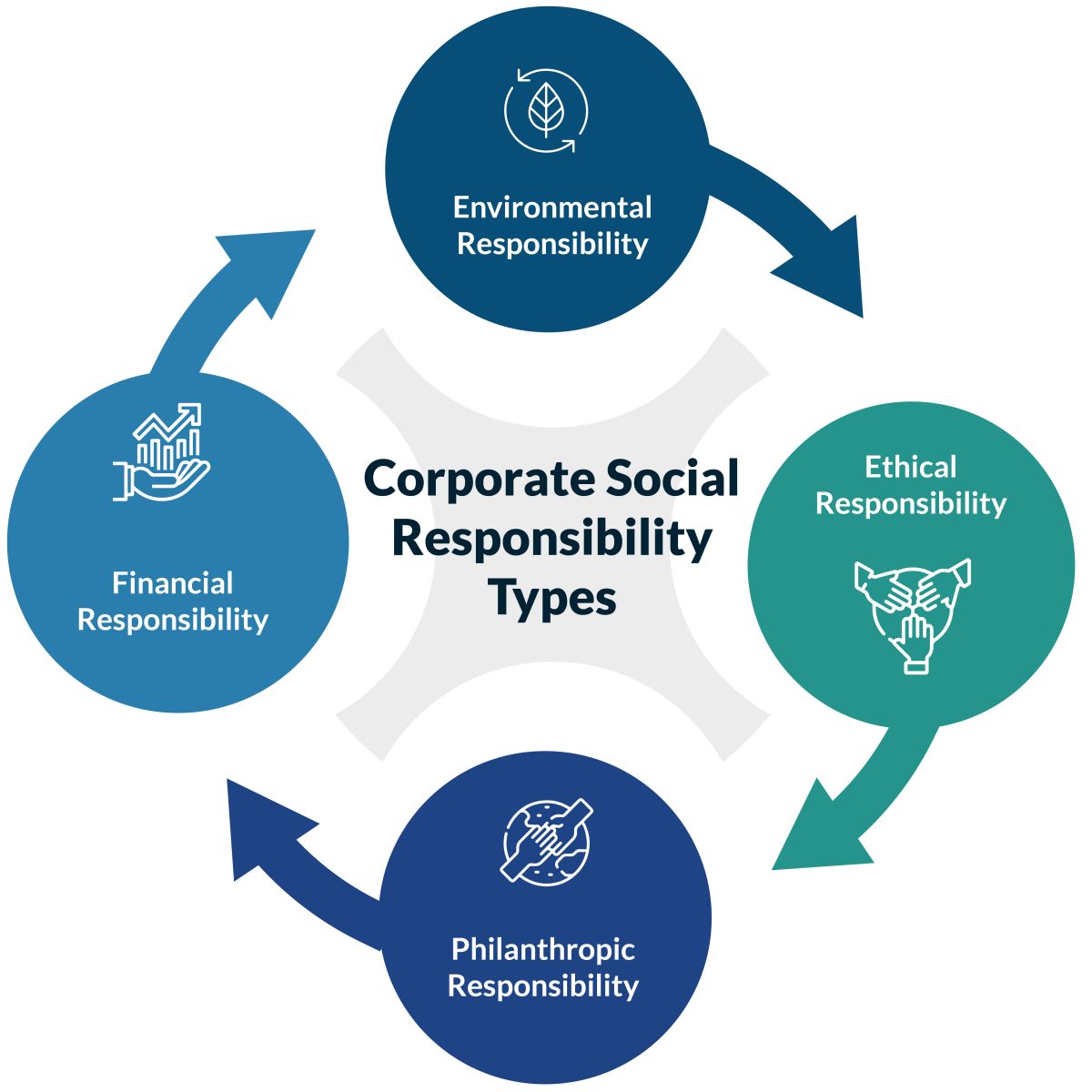
Environmental
Environmental responsibility is critical to sustainable business practice. It includes a commitment to reducing environmental impact by lowering pollution, waste and emissions. Companies can run recycling programmes and provide resources to prevent environmental damage.
Prioritising low-carbon methods and thoughtful resource allocation is especially helpful in environmental management. Companies show their commitment to environmental CSR by sourcing environmentally friendly raw materials and adopting sustainable practices. In an era of climate change awareness, businesses must combine these approaches to build a legacy of responsible enterprise and environmental care.
Ethical
Ethical behaviour is essential for companies to show responsibility and fairness. They set standards based on external influences and client expectations.
Key aspects of ethical responsibility include:
- Ensuring fair treatment for all customers, regardless of demographics.
- Providing employees with favourable pay and benefits.
Engaging vendors who promote equality, and giving investors honest and timely disclosure of operational concerns.
DataGardener can help improve ethical responsibility by providing supplier diversity data. This data supports diverse vendor engagement and promotes equality and ethical sourcing practices. Using the platform can have a positive impact on a company’s ethical responsibility.
Adopting diversity, equity and inclusion policies reinforces best ethical practice and demonstrates a commitment to fair and responsible corporate citizenship within the broader community.
Philanthropic
This is a crucial element of CSR and refers to a company’s commitment to positively impacting society. It includes activities such as:
- Benefiting charitable causes.
- Engaging with vendors who share philanthropic values.
- Developing employee-driven philanthropic initiatives through time-off policies or donation-matching programmes.
Companies can also demonstrate charitable responsibility by sponsoring fundraising events and actively participating in local initiatives. Through this, organisations contribute to social wellbeing and foster a culture of generosity and compassion within their communities.
Financial
Financial responsibility is a core tenet of CSR, bridging environmental, ethical and philanthropic pursuits. It involves strategic investment in sustainable product research, diverse talent recruitment and initiatives that promote social awareness. Transparent financial reporting and policy development underscore accountability and demonstrate a commitment to CSR improvement.
Benefits of CSR Corporations
CSR benefits extend beyond business success and create a positive impact on society and the environment. Here are some key benefits:
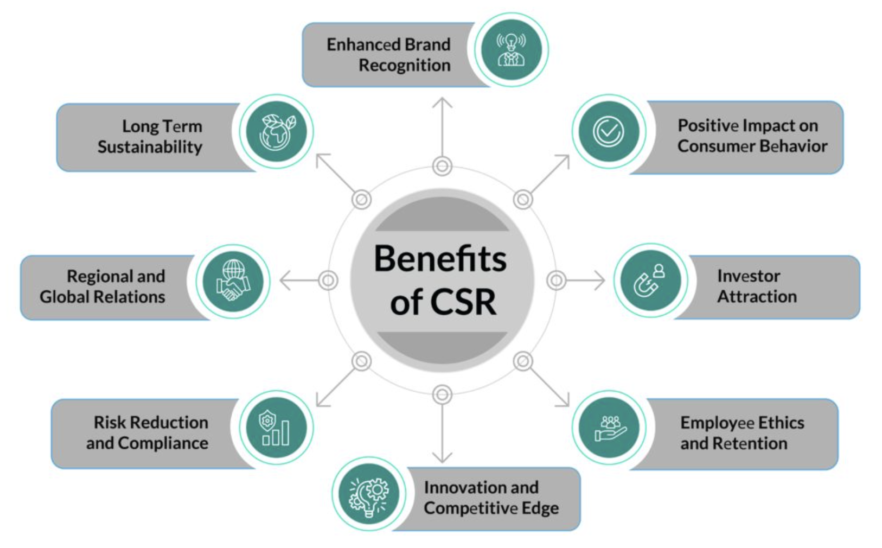
Enhanced Brand Recognition
Consumers are increasingly swayed by an organisation’s sustainable development initiatives when making purchasing decisions.
Strong CSR fosters brand loyalty and builds a foundation of trust between the company and its consumers.
Positive Impact on Consumer Behaviour
Research indicates that customers show a strong preference for businesses that are actively engaged in CSR. CSR shapes how consumers see businesses and influences their preference for socially responsible companies.
Investor Attraction
Companies that excel at CSR often experience tangible financial benefits. Organisations that show commitment to sustainable development attract investors, who naturally gravitate towards them.
Employee Ethics and Retention
CSR activities play an essential role in raising employee morale and building a positive workplace culture. They show that the company’s values align with its employees’ principles, which improves staff retention and reduces attrition.
Innovation and Competitive Edge
CSR becomes a catalyst for innovation when companies actively pursue sustainable, socially responsible solutions. Businesses gain a competitive edge by embracing CSR and aligning their practices with the expectations of socially minded consumers, beyond simply offering innovative products.
Risk Reduction and Compliance
CSR practices act as a proactive measure to steer the company away from legal issues by promoting ethical conduct. Commitment to CSR helps reduce the risks associated with unethical practices, securing the company’s position.
Regional and Global Relations
Participating in CSR strengthens ties with local communities and contributes positively to global wellbeing. Companies with a steadfast commitment to CSR often find that their influence extends globally and fosters positive relationships internationally.
Long Term Sustainability
CSR contributes significantly to the long-term sustainability of businesses by nurturing a positive public image. Sustainable practices driven by CSR initiatives:
- Align the company with evolving market dynamics.
- Fortify its resilience in the face of economic change over time.
Embracing CSR not only benefits society but also positions businesses as responsible and forward-thinking. It influences consumer choices, attracts investors and fosters a positive internal culture that ultimately contributes to long-term success.
Examples of CSR:
Here are examples of companies showing CSR through initiatives focused on employee wellbeing, philanthropy, equity and ambitious environmental goals. These examples highlight the positive impact of a holistic CSR approach on society and the environment.
Starbucks
Starbucks exemplifies strong corporate social responsibility through its commitment to both its workforce and the planet. In its 2022 Environmental and Social Impact Report, the company outlines investments in its employees, including stock grants and comprehensive benefits. Its environmental sustainability goals include a 50% reduction in greenhouse gas emissions, water consumption and waste by 2030.
Microsoft
Microsoft has become an example of holistic corporate social responsibility, earning consistent praise for leading philanthropy, equity and sustainability initiatives. In 2022, Microsoft and its employees donated $255 million to over 32,000 nonprofits worldwide. Over 29,000 employees volunteered more than 720,000 hours for impactful causes.
Microsoft is also a trailblazer in environmental sustainability. It has pledged $1 billion to accelerate climate innovation and aims to become carbon-negative by 2030. This multi-dimensional CSR approach shows that doing good and doing business can reinforce each other. Microsoft provides a model for socially conscious corporate citizenship.
Common Mistakes to Avoid on Corporate Social Responsibility Efforts
Navigating CSR efforts demands strategic precision to avoid common pitfalls. Here are key considerations to enhance the effectiveness of these initiatives:
1. Putting Short-Term Gains Over Long-Term Impact
- Avoid the temptation to pursue quick wins or CSR that only looks good on the surface.
- True CSR requires strategic, long-term planning that drives meaningful and lasting change beyond quarterly metrics. Focus on sustainability.
2. Greenwashing Instead of Authentic Sustainability
- Guard against deceptive “greenwashing”, where sustainability claims are not backed by meaningful action.
- Ensure environmental and social efforts align with your goals through tangible and measurable actions. The key to sustainable action is authenticity.
3. Empty Promises Without Concrete Action
- Simply discussing how to do good is not enough. You have to back up words with deeds.
- Tangible CSR action and measurable results demonstrate authenticity and build trust with stakeholders. Hollow commitments ruin credibility quickly.
4. Inconsistent and Opaque CSR Reporting
- Avoid haphazard and inconsistent reporting by implementing regular, transparent communication channels.
- Clear, consistent and transparent CSR reporting reinforces accountability to stakeholders and the public.
5. Failure to Reach All Stakeholders
- Do not isolate CSR in a siloed department. Ensure comprehensive engagement throughout the organisation.
- CSR is crucial for securing buy-in and feedback from internal and external stakeholders and aligning them with the CSR mission.
Steering clear of these mistakes helps organisations to:
- Meet their CSR goals.
- Build a reputation based on reality and transparency, as well as long-term impact.
Why Companies Need Corporate Social Responsibility (CSR)
The importance of CSR is multi-faceted and includes:
1. Enhanced Reputation and Brand Image
Companies that responsibly address social and environmental issues tend to enhance their public image and brand reputation. Today, buyers value corporate ethics.
2. Building Stakeholder Relationships
By embracing CSR, corporations can earn greater credibility and loyalty from key stakeholders, such as customers, employees, investors and neighbouring communities. CSR is a commitment to shared values.
3. Drives Innovation and Performance
CSR encourages the development of more sustainable materials and strategies that reduce waste and resource usage. This focus on efficiency leads to both environmental and economic benefits.
4. Attracting and Retaining Talent
A robust CSR programme increases employee morale, pride and engagement. Employees, particularly younger generations, are drawn to companies with strong ethical principles and a positive social impact.
5. Ensuring Long-Term Success
Companies that build corporate social responsibility into their plans are better prepared to meet social and environmental expectations. This leads to long-term success for the business.
The Companies Act
The UK Companies Act of 2006 expanded corporate responsibility beyond shareholders. Section 172 requires directors to act in the way they consider, in good faith, would be most likely to promote the success of the company for the benefit of its members as a whole. In doing so, they must have regard to matters including the interests of employees, relationships with suppliers and customers, and the impact of the company’s operations on the community and the environment.
However, the Act does not set out specific CSR requirements or penalties. While Section 172 encourages socially aware business practices, it does not mandate CSR initiatives.
The Act opens the door to CSR without giving guidance on how to put it into practice.
Conclusion
CSR is when companies give back to society and the environment by using ethical practices in their business model. As societal expectations evolve, holistic corporate responsibility is vital for businesses to thrive. By leveraging insights from DataGardener, FinTechs can demonstrate their commitment through ethical practices, philanthropic initiatives and ambitious environmental goals. Authentic, visible and measurable CSR will appeal to talent, clients and investors, supporting lasting success.
FAQs:
Q: Which companies are known for strong CSR?
Ans: Microsoft, Coca-Cola, Starbucks, Citrix, Google and Netflix are often cited as leaders in corporate social responsibility. They excel at driving social impact and empowering communities.
- Microsoft and Google focus on environmental initiatives.
- Coca-Cola and Starbucks are at the forefront of ethical procurement.
- Citrix prioritises workplace diversity and inclusion.
- Netflix promotes employee involvement in giving back.
These companies show how doing good and doing business can go hand in hand.
Q: What are the principles of CSR?
Ans: The core principles are Sustainability, Accountability and Transparency.
- Sustainability ensures long-term harmony with the environment.
- Accountability holds companies responsible for their actions.
- Transparency builds trust through open communication.
These principles guide ethical business practice and benefit both society and the environment.