

The Procurement Act 2023 came into force on 24 February 2025 and has materially reshaped how supplier risk is identified, assessed, and managed across UK public procurement. Whether you are a public sector buyer or a supplier bidding for contracts, understanding what the new regulations require is no longer optional. It is a compliance requirement with direct implications for how contracts are awarded, managed, and scrutinised at every stage.
With supply chain disruptions, rising ESG demands, and financial instability shaping the procurement environment, contracting authorities must now manage supplier risk in a transparent, auditable, and embedded manner throughout the procurement process. The Procurement Act 2023 makes this expectation explicit and enforceable across every stage of public contract delivery.
For procurement teams seeking to understand how data intelligence supports compliance with the Act’s continuous monitoring expectations, DataGardener’s Responsible Procurement module provides the supplier-intelligence infrastructure designed specifically for this purpose.
What Problems Was the Procurement Act 2023 Designed to Solve?
Before examining what the Act requires, it is worth understanding the real-world challenges it was designed to address. Many public bodies lacked a centralised system for assessing and monitoring supplier risk over time, making it harder to identify issues until problems had already materialised.
Social value measurement remained a persistent difficulty. Teams often lacked the tools or data to quantify and track social impact throughout the contract lifecycle rather than simply at the point of award.
SMEs and voluntary, community, and social enterprises were meant to benefit from better access to public contracts, yet many continued to face real barriers in qualification, visibility, and engagement that the previous framework could not resolve.
Environmental and governance factors were increasingly being incorporated into supplier evaluation, yet many authorities remained under-equipped to consistently track ESG performance across their supply base. The Procurement Act 2023 was designed to address each of these gaps directly. For a broader understanding of how supplier diversity obligations have evolved alongside the Act, see DataGardener’s guide to supplier diversity guidelines in the UK.
How Does the Procurement Act 2023 Handle Risky Suppliers?
The Procurement Act 2023 provides clear rules for dealing with risky suppliers to protect the integrity of public contracts.
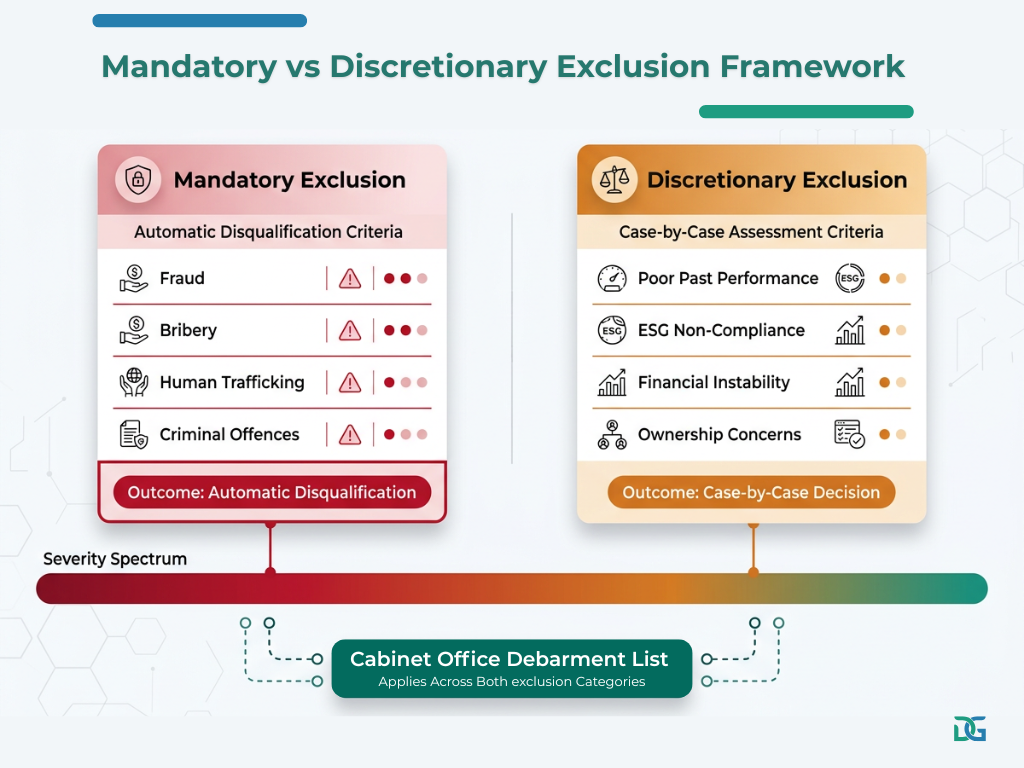
Mandatory exclusion applies where suppliers have been convicted of serious offences, including fraud, bribery, or human trafficking. These are non-discretionary A contracting authority cannot proceed with a supplier that is subject to a mandatory exclusion, regardless of commercial considerations.
Beyond mandatory exclusion, the Act also provides for discretionary exclusion. This applies to factors that pose risk without necessarily involving criminal conduct, including repeated contract breaches, non-compliance with ESG or regulatory standards, poor financial health, and concerns about ownership structures or beneficial interests.
The Procurement Act 2023 introduces a formal debarment list maintained by the Cabinet Office for suppliers that present ongoing or significant risk. This list is publicly accessible, allowing procurement teams to confirm at any stage whether a supplier has previously been excluded and on what grounds. The debarment list represents a significant transparency measure, creating a searchable public record of supplier exclusions that did not exist in the same form under previous procurement legislation.
How Does the Procurement Act 2023 Address Conflicts of Interest?
The Act introduces explicit obligations on contracting authorities to identify, assess, and manage conflicts of interest throughout the procurement process. This applies not only at the point of supplier selection but across the entire lifecycle of the contract.
Undisclosed or unmanaged conflicts can directly compromise procurement integrity and introduce long-term risk into supplier relationships. An early-identified conflict, managed transparently, creates an auditable record. One that goes unaddressed creates legal and reputational exposure for the contracting authority.
For procurement teams, this shifts conflict management from a procedural step at the outset of a procurement exercise to an ongoing compliance responsibility that runs alongside the contract itself. Internal governance processes must reflect this expanded obligation from the point of market engagement onwards.
What Due Diligence Does the Procurement Act 2023 Require?
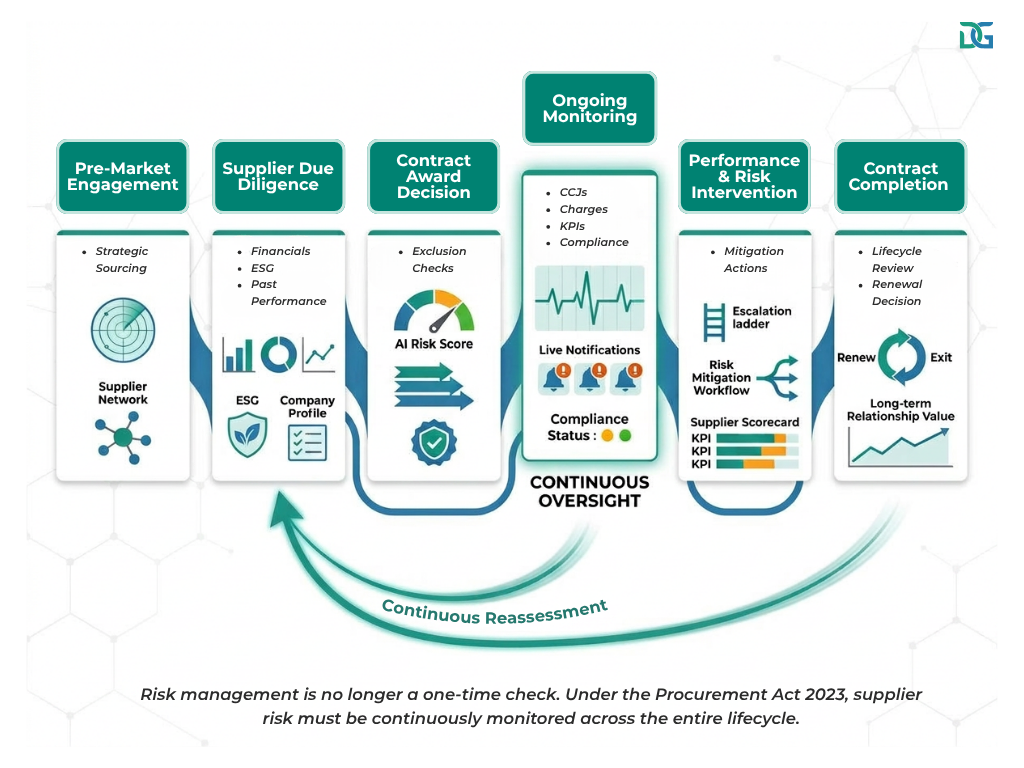
With the Procurement Act 2023, due diligence is more than a one-time process. It is an ongoing responsibility that extends from initial market engagement through to contract completion.
Before the contract is awarded, public sector buyers must evaluate suppliers’ risk profiles comprehensively. This includes assessing financial stability to determine whether a supplier is solvent and whether it has a history of financial difficulty. It also covers past performance, including whether previous contracts have been delivered to the required standard, as well as compliance with legal, environmental, and ethical standards.
Pre-contract checks under the new framework are more structured and more closely tied to formal exclusion grounds than under previous procurement rules. However, the Act’s most significant shift is what happens after the award.
After the contract is awarded, due diligence does not end. The Act places a clear expectation on contracting authorities to maintain ongoing visibility over supplier performance, financial stability, and compliance throughout the contract lifecycle. This includes regular risk assessments, monitoring of social value delivery, and continuous tracking of performance indicators.
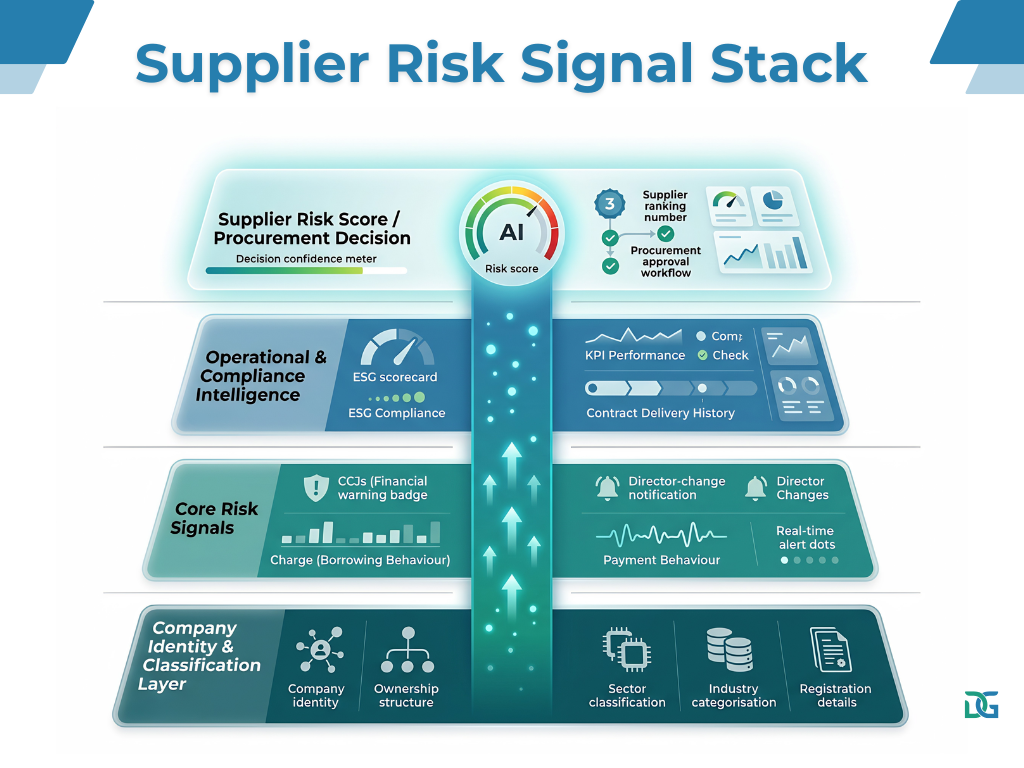
For procurement teams handling multiple suppliers simultaneously, DataGardener’s risk and compliance tools are designed to support the Act’s continuous oversight expectations, providing automated financial monitoring, CCJ tracking, charge notifications, and director change alerts across supplier portfolios of any size.
What Transparency Does the Procurement Act 2023 Notice Regime Introduce?
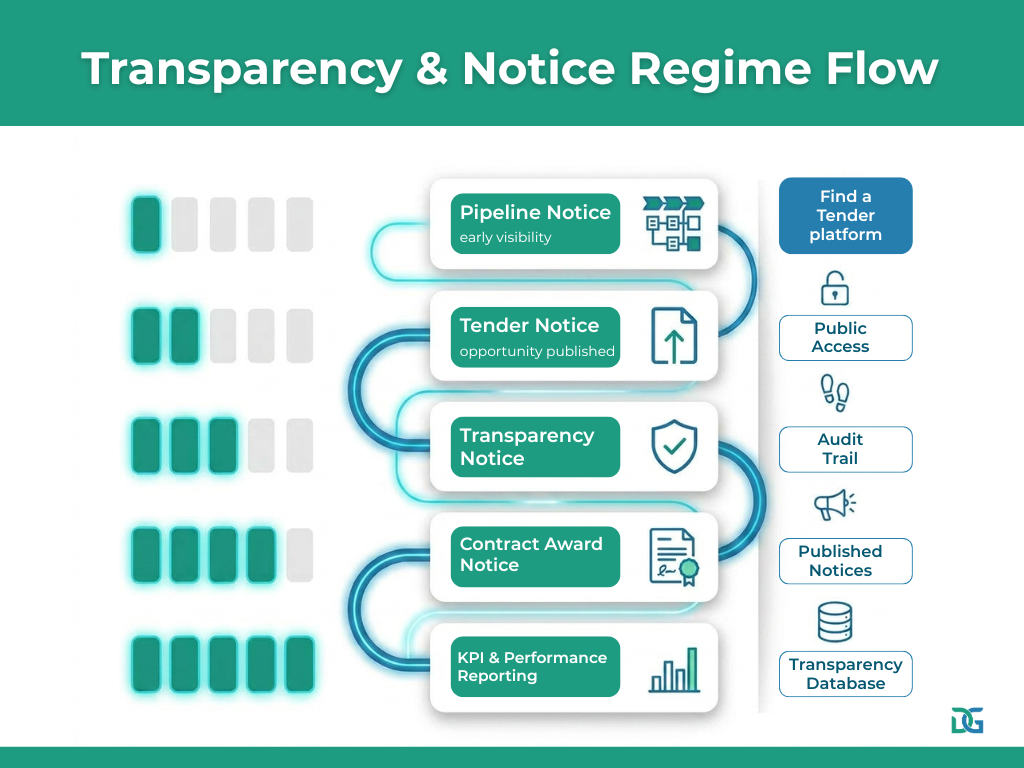
One of the most operationally significant changes under the Procurement Act 2023 is the introduction of a structured notice regime. This directly impacts supplier risk visibility across the procurement market.
Contracting authorities are now required to publish a range of formal notices through the Find a Tender service. Pipeline Notices are required for contracts exceeding £2 million, giving the market advance visibility of upcoming procurement activity. Tender Notices replace the previous OJEU Contract Notices, ensuring that procurement opportunities are published through the central digital platform introduced under the Act. Transparency Notices are required for direct awards, creating a public record when competitive tendering has not taken place.
This shift creates a continuous public record of procurement activity that did not exist in the same form under previous legislation. For procurement teams, it introduces a new layer of accountability. For supplier risk management, the notice regime provides a clearer audit trail of supplier selection decisions, contract allocation, and procurement decision-making over time.
The practical implication is direct. Supplier risk is no longer assessed in isolation. It is increasingly visible, traceable, and open to scrutiny from suppliers, oversight bodies, and the public.
How Do Payment Rules Under the Procurement Act 2023 Affect Supplier Risk?
The Procurement Act 2023 reinforces the importance of payment discipline across the supply chain. In doing so, it creates a new dimension of measurable supplier risk.
Contracting authorities are required to ensure that 30-day payment terms are applied not only at the top level of the contract but also flow down through subcontracting arrangements. Authorities are additionally expected to monitor and publish their payment performance, creating transparency around how consistently contractual payment obligations are being met.
Delayed payment is one of the earliest and most reliable indicators of supplier financial stress.. By formalising payment timelines and increasing transparency around payment performance, the Act turns payment behaviour into a measurable risk signal. It sits within the wider supplier management framework alongside financial data, KPIs, and compliance indicators.
A supplier experiencing payment delays may be showing early signs of financial deterioration that would not yet be visible through annual accounts or credit data alone. Understanding how to read these early financial stress signals is covered in DataGardener’s guide to company financial health, which explains the indicators most relevant to procurement due diligence.
How Does the Procurement Act 2023 Help Identify High-Risk Suppliers?
The Act equips procurement teams with both a legislative framework and an expectation of digital infrastructure to support early identification of risk.
The Find a Tender service and the central digital platform introduced under the Procurement Act 2023 provide buyers with access to supplier financial health data, legal and compliance information, verification of previous exclusions, and social value performance tracking. This platform enhances transparency materially, allowing procurement teams to identify suppliers presenting risk before contracts are awarded rather than discovering issues during delivery.
In addition to government platforms, third-party data services provide real-time insights into supplier risk that statutory platforms alone cannot replicate.The Cabinet Office’s Procurement Act 2023 implementation guidance is explicit that contracting authorities must use available tools and data to ensure robust supplier risk assessment throughout the procurement lifecycle.
Authorities can assess whether a supplier is likely to perform against required standards, whether their financial position has changed since pre-qualification, and whether there are emerging signals of operational or compliance risk. For teams managing large supplier bases, DataGardener’s Business Intelligence platform enables this kind of real-time assessment across thousands of companies simultaneously.
What Role Do KPIs Play Under the Procurement Act 2023?
For contracts classified as strategic under the Procurement Act 2023, contracting authorities are required to define, publish, and monitor key performance indicators throughout the contract lifecycle.
These KPIs are not optional reporting metrics or internal management tools. They form part of the formal contract management framework and must be tracked, published, and reported on throughout delivery. This creates a public record of supplier performance against agreed standards that did not previously exist in a consistent form across public procurement.
From a supplier risk perspective, mandatory KPI monitoring introduces a structured and auditable mechanism for identifying underperformance early. Failure to meet KPIs is no longer a subjective management concern. It becomes a recorded, reportable, and defensible risk indicator within the contract record.The KPI framework also creates a structured and defensible basis for early intervention with underperforming suppliers before issues escalate into formal contract failure.
What Are the Best Practices for Managing Supplier Risk Under the Procurement Act 2023?
Establish a clear risk management framework that aligns with the Act’s requirements from the outset. Build internal processes for risk identification, evaluation, and ongoing monitoring that connect directly to the Act’s exclusion grounds, KPI obligations, and transparency requirements rather than operating as a parallel internal process.
Apply data intelligence at every decision point throughout the procurement lifecycle. Digital tools and data-driven supplier intelligence enable procurement teams to automate risk assessments, reduce manual verification burden, and make more informed decisions more quickly. The Act’s continuous monitoring expectations cannot realistically be met through manual processes alone at any meaningful scale.
Stay responsive to emerging risk signals. The Act places a clear obligation on continuous monitoring rather than periodic review. Procurement teams need systems that flag financial deterioration, compliance changes, director movements, and performance indicators in real time. Understanding the specific red flags that indicate supplier stress is covered in DataGardener’s guide to companies in financial distress, which identifies the early indicators most relevant to procurement risk assessment. Train procurement teams specifically on the Act’s provisions. Understanding the distinction between mandatory and discretionary exclusion grounds, the obligations around the notice regime, and the KPI requirements for strategic contracts is essential for teams making and defending procurement decisions under the new framework. The Chartered Institute of Procurement and Supply provides accredited training and guidance specifically aligned with the Procurement Act 2023 requirements.
Frequently Asked Questions:
When did the Procurement Act 2023 come into force?
The Procurement Act 2023 came into force on 24 February 2025, replacing the previous UK procurement regulations including the Public Contracts Regulations 2015. All public procurement activity initiated on or after this date must comply with the new framework.
What is the debarment list under the Procurement Act 2023?
The debarment list is a public register maintained by the Cabinet Office that records suppliers excluded from public contracts under the Procurement Act 2023. Contracting authorities must check this list before awarding contracts. Suppliers on the list have been excluded on grounds ranging from criminal conviction to serious contract failure or regulatory non-compliance.
What are the mandatory exclusion grounds under the Procurement Act 2023?
Mandatory exclusion applies where a supplier or its associated persons have been convicted of offences including fraud, bribery, tax evasion, modern slavery, human trafficking, and certain competition law breaches. These exclusions are non-discretionary.No contracting authority can award a public contract to a supplier subject to mandatory exclusion, regardless of commercial considerations.
What is the notice regime under the Procurement Act 2023?
The notice regime requires contracting authorities to publish Pipeline Notices for contracts over £2 million, Tender Notices for competitive procurement opportunities, and Transparency Notices for direct awards. These notices must be published through the central digital platform and the Find a Tender service, creating a continuous public record of procurement activity and supplier selection decisions.
How does the Procurement Act 2023 affect ongoing supplier monitoring?
The Act places a clear expectation on contracting authorities to monitor supplier performance, financial stability, and compliance continuously throughout the contract lifecycle. For strategic contracts, this includes mandatory KPI publication and monitoring. The payment transparency provisions create an additional mechanism for identifying early financial stress in the supply chain.