
What’s in the article ?
- What Is EPC Rating Explained and How Has It Traditionally Worked?
- What Actually Determines an EPC Rating?
- What Are the 2026 Changes and Why Do They Matter?
- What Are the Four New EPC Rating Metrics From October 2026?
- Why Does the EPC Rating Explained System Matter for Property Owners?
- How Does EPC Rating Explained Apply to Commercial Buildings?
- What Properties Now Require an EPC Rating Under the New Rules?
- How Long Is an EPC Rating Valid and What Happens During the Transition?
- What Does the EPC C by 2030 Target Mean for Landlords?
- What Is the Fabric First Approach to Improving an EPC Rating?
- How to Improve an EPC Rating Without Excessive Cost
- What Funding and Grants Are Available to Improve Your EPC Rating?
- Do EPC Rating Exemptions Apply Under the New Rules?
- How Do You Get an EPC and Find an Accredited Assessor?
- Why Is the EPC Rating Explained System Changing at All?
- Is the 2026 EPC Reform a One-Off Change or Part of a Longer Shift?
EPC rating explained is a search that is becoming increasingly common as energy efficiency moves to the centre of how property is assessed across the UK. For most people, an Energy Performance Certificate has always been something encountered at the point of letting or buying a property. It sits alongside other documents, briefly examined, then quietly set aside.
That casual relationship is beginning to shift. Energy efficiency now influences compliance, running costs, tenant demand and long-term asset value. The government’s push for privately rented homes to reach EPC rating C by 2030 is not simply another regulatory adjustment. It signals a broader change in expectations around how buildings should perform.
To understand where the market is heading, it helps to start with the fundamentals before moving into what has changed and what those changes mean in practice.
What Is EPC Rating and How Has It Traditionally Worked?
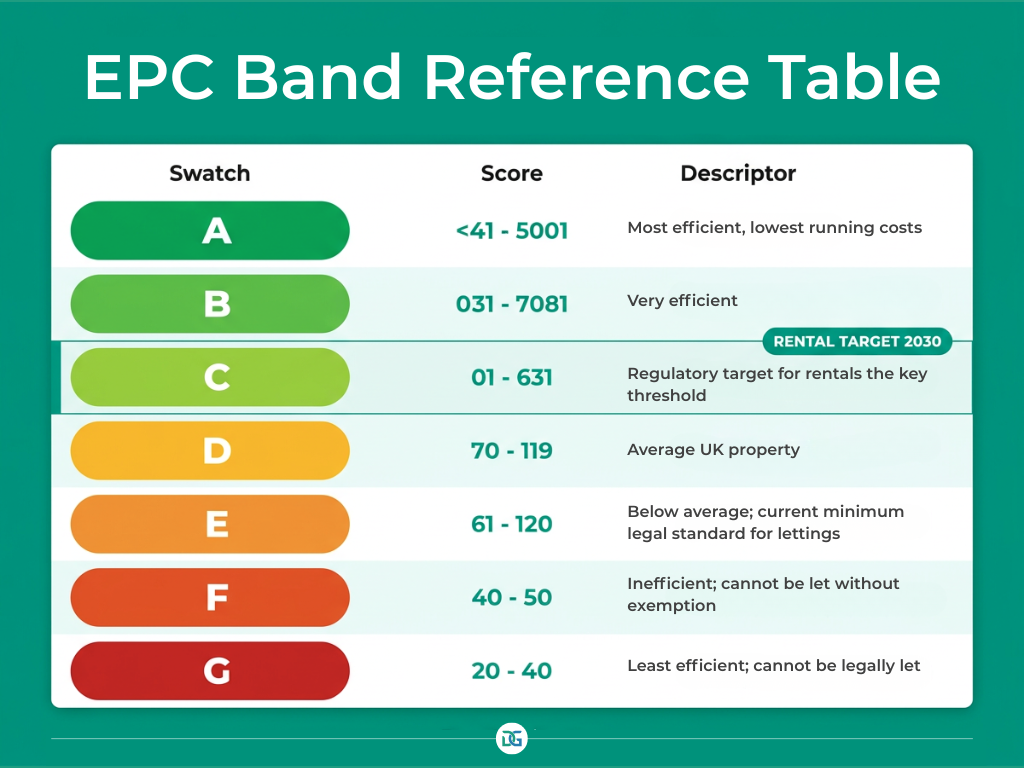
An EPC is a standardised assessment of a building’s energy efficiency. It produces a score out of 100 and places the property into a band from A to G. The higher the score, the more efficient the property is considered to be.
This rating has historically been driven largely by estimated energy costs. A well-insulated home using electricity could receive a weaker rating simply because electricity costs more than gas. A poorly insulated home with a cheaper heating source could appear stronger than it really is.
This disconnect between cost and actual performance has been one of the central weaknesses of the EPC system. It has allowed certain inefficiencies to remain hidden. It has also rewarded properties that are not necessarily better built, only cheaper to run under current pricing structures.
What Actually Determines an EPC Rating?
Behind the headline score, an EPC draws on several core components. The fabric of the property sits at the centre. This includes walls, roof, floors and windows, all of which determine how effectively heat is retained or lost. Poor insulation leads to continuous energy loss, which directly affects efficiency.
The heating system is the next major factor. Boilers, heat pumps and electric systems are assessed based on efficiency and fuel type. Lighting and ventilation also contribute, though to a lesser extent. Efficient lighting offers incremental improvements to the overall score.
Finally, assessors estimate the cost of running the property under normal conditions. All of these elements combine into a single number. This compresses a complex set of variables into one simplified rating. This is precisely what the new EPC reforms aim to change.
EPC Rating Explained: What Are the 2026 Changes and Why Do They Matter?
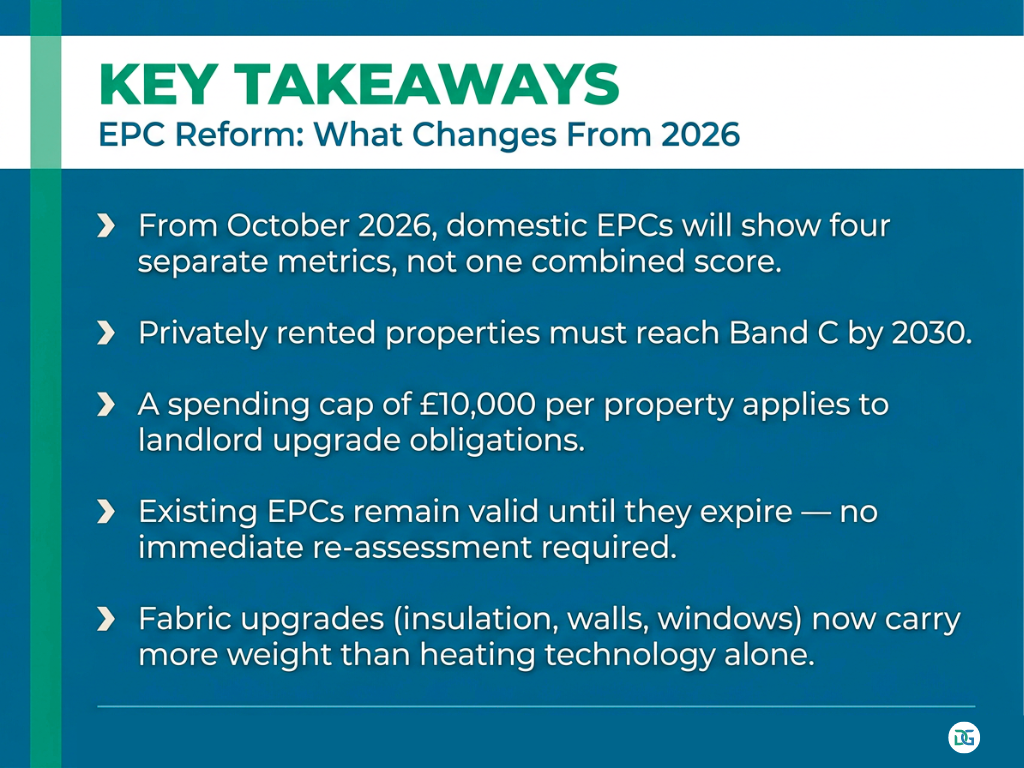
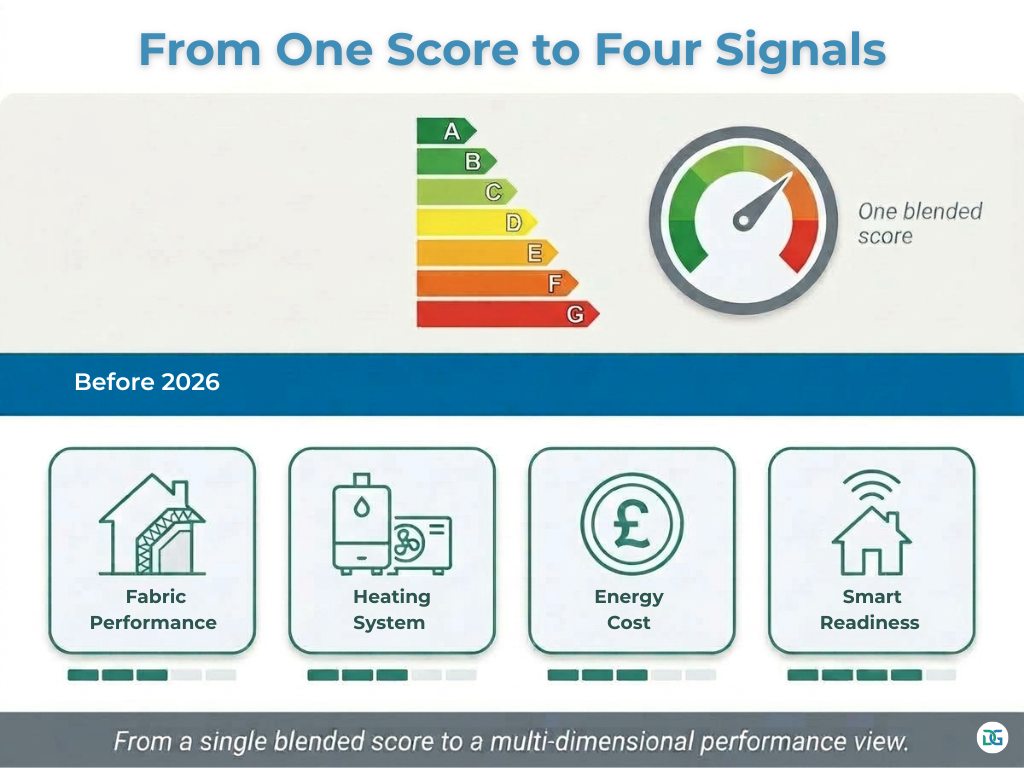
On 21 January 2026, the government published its partial response to the consultation on EPC reform. It confirmed a move away from the traditional single score. From October 2026, domestic EPCs will present four separate metrics instead of one combined rating. This offers a more detailed view of performance.
Fabric performance will measure how well the building retains heat. It focuses purely on insulation and construction quality. The heating system metric will assess both efficiency and carbon impact. This reflects the shift towards cleaner technologies.
Energy cost will remain to provide transparency on affordability for occupiers. A new addition, smart readiness, will evaluate whether a property can integrate with modern energy systems such as smart meters and flexible tariffs. For a transitional period, the traditional rating will still appear alongside these metrics to maintain continuity with existing regulatory targets.
What Are the Four New EPC Rating Metrics From October 2026?
The shift from a single score to four separate metrics is the most significant structural change to the EPC rating system since its introduction. Each metric captures a distinct dimension of energy performance. Property owners, buyers and tenants get a more granular picture of how a building actually performs.
Fabric Performance measures the thermal quality of the building envelope. Walls, roof, floor and windows all feed into this score. A property with poor fabric performance loses heat rapidly regardless of what heating system is installed. This makes it the foundational metric under the new framework.
Heating System Efficiency assesses the type and efficiency of the primary heating system. This includes gas boilers, heat pumps and electric systems. Fuel type is weighted here, as carbon-intensive fuels score lower in line with decarbonisation targets.
Energy Cost estimates the annual operating cost of the property under standard occupancy conditions. This gives buyers and tenants a directly actionable financial figure rather than an abstract performance score.
Smart Readiness indicates whether the property can integrate smart energy technologies. These include smart meters, EV charging points, battery storage and demand-response controls. This metric will carry increasing weight as the national grid evolves and smart technology becomes standard.
A property that scores well on fabric performance but poorly on smart readiness will be clear under the new EPC rating system. The old single score would have masked that gap entirely.
Why Does the EPC Rating System Matter for Property Owners?
The most important shift lies in the separation of fabric performance from energy cost. Under the previous system, landlords could improve a rating by upgrading the heating system alone. The building itself could remain inefficient. That route is now closing.
A property with poor insulation can no longer hide behind a modern heating system. Weaknesses in the building envelope will be visible in their own right. This makes it far more difficult to present an inefficient property as acceptable on paper.
For much of the UK’s older housing stock, this creates a moment of exposure. Properties that appear reasonable today may look significantly weaker under the new framework. This is particularly true where they rely on technology to compensate for structural inefficiencies.
How Does EPC Rating Apply to Commercial Buildings?
While domestic EPCs are being restructured, non-domestic buildings will continue to use a carbon-based Environmental Impact Rating as their primary metric. This reflects the way businesses already approach energy performance, focusing on emissions and regulatory reporting.
The decision to retain this system is largely practical. Commercial property decisions are closely tied to carbon targets and compliance frameworks. The existing approach remains fit for purpose even as the domestic system evolves.
What Properties Now Require an EPC Rating Under the New Rules?
The reforms extend EPC requirements to areas that previously operated with exemptions or limited oversight.
Heritage and listed buildings now require an EPC when sold or let. This marks a significant shift in policy. Houses in Multiple Occupation must have a valid EPC covering the entire building, even where only individual rooms are rented out. Short-term and holiday lets are also fully in scope, regardless of who pays the energy bills.
This expansion is about consistency as much as regulation. The government is closing gaps that allowed parts of the property market to operate outside the broader energy framework.
How Long Is an EPC Rating Valid and What Happens During the Transition?
EPCs retain their ten-year validity period, following industry feedback on cost and practicality. New certificates issued from October 2026 will follow the updated format. Existing certificates remain valid until they expire.
This means the old and new systems will run side by side for several years. Two similar properties may appear very different simply because assessors rated them under different frameworks.
Compliance is triggered at key moments, particularly when a property is marketed for sale or rent. This ensures that energy performance remains visible at the point where decisions are made.
What Does the EPC C by 2030 Target Mean for Landlords?
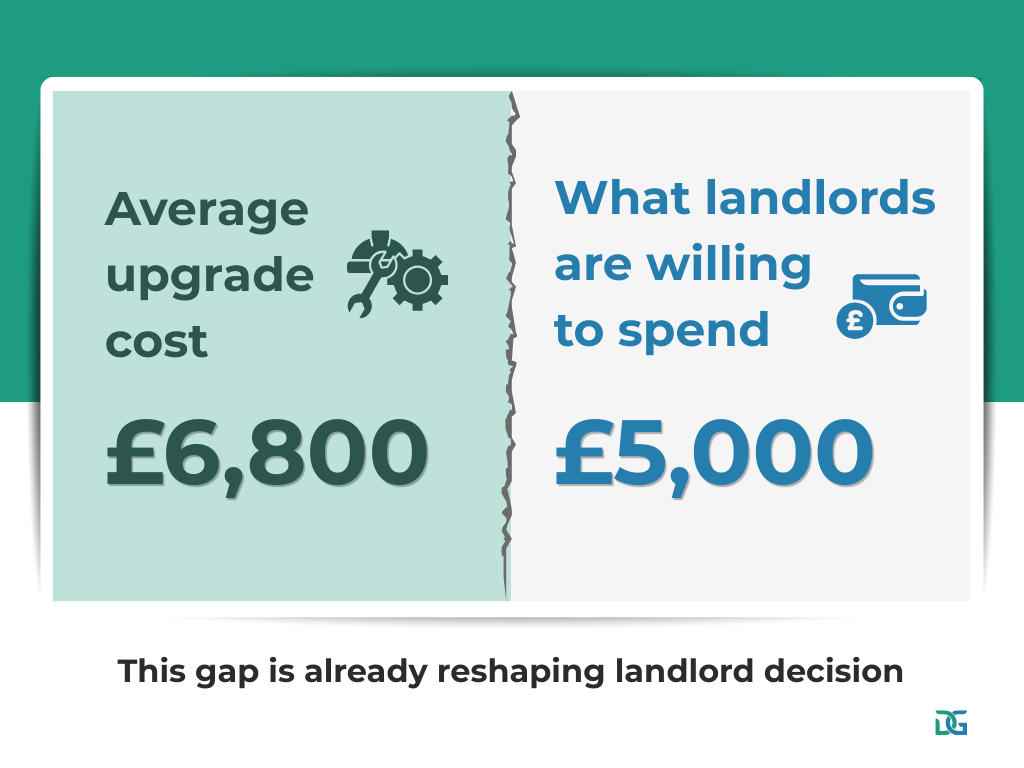
Alongside structural reform sits a clear regulatory target. Most privately rented properties must reach EPC band C by 2030. This requirement comes with a spending cap of £10,000 per property, intended to limit the financial burden.
The numbers reveal a growing gap between policy and behaviour. Average upgrade costs are estimated at around £6,800. A large proportion of landlords indicate they are unwilling to invest beyond £5,000.
This gap is already shaping the market. Some landlords are investing gradually. Others are delaying decisions. A noticeable segment is choosing to exit altogether, particularly where older properties require significant work.
What Is the Fabric First Approach to Improving an EPC Rating?
The introduction of a standalone fabric metric changes how improvements must be approached. Insulation is no longer a background factor hidden within a composite score. It is now a visible and decisive element of the rating.
This reinforces the fabric first strategy. Improvements to insulation, glazing and overall building structure take priority. Heating upgrades still matter, but they now sit on top of the building’s core performance rather than compensating for its weaknesses.
For landlords and asset managers, this represents a shift in mindset. Efficiency is no longer about adding technology. It is about improving the building itself.
How to Improve an EPC Rating Without Excessive Cost
Not every improvement requires major capital investment. Smaller changes can still deliver measurable results.
Lower-cost measures: increasing loft insulation to recommended levels can significantly improve a rating. Cavity wall insulation offers a relatively low-cost upgrade with clear impact. Switching to LED lighting provides smaller gains at minimal expense. This makes it an easy starting point for many properties.
Higher-impact upgrades such as solar panels or heat pumps provide stronger long-term benefits. These work best when combined with solid fabric performance. Under the new EPC rating explained framework, this combination becomes essential rather than optional.
What Funding and Grants Are Available to Improve Your EPC Rating?
The government has introduced a mix of funding mechanisms rather than relying solely on direct grants. The £5 billion Warm Homes Fund is designed to underpin loans and broader financing options. This allows costs to spread over time.
The Energy Company Obligation and the Great British Insulation Scheme provide targeted support. This is particularly for lower-income households and lower-rated properties. In some cases, funding can cover a significant portion of upgrade costs.
There is also a tax advantage. Qualifying improvements may be treated as allowable expenses, helping to offset upfront investment. Even with this support, the financial challenge remains, particularly for smaller landlords with limited capital.
Do EPC Rating Exemptions Apply Under the New Rules?
Not all landlords will be able to meet the EPC C requirement by 2030. The government has made provision for exemptions in specific circumstances.
A high-cost exemption may apply where the full cost of works exceeds the £10,000 spending cap and the property still cannot reach Band C after those works are completed. Landlords must demonstrate that reasonable investment has been made before the exemption is valid.
Other exemptions exist where planning consent or listed building status prevents certain improvements. They also apply where a sitting tenant refuses access for works, or where required works would reduce the market value of the property by more than 5%.
Exemptions must be formally registered on the PRS Exemptions Register. They are not automatically granted. Relying on an exemption without registering it correctly counts as non-compliance. Penalties for non-compliance can reach £30,000 for serious or repeated breaches.
Landlords who believe they may qualify should seek advice early. The registration process requires documented evidence and does not apply retrospectively.
How Do You Get an EPC and Find an Accredited Assessor?
An EPC must be produced by an accredited energy assessor. It cannot be self-assessed or produced by an unqualified individual. Accredited assessors are registered with government-approved accreditation schemes. Their qualifications can be verified online before booking.
The simplest way to find an accredited domestic energy assessor is through the government’s official register at gov.uk/find-energy-certificate. The same portal allows anyone to check whether an existing EPC is on record for a property, confirm its rating and view its current validity period.
Assessment fees typically range from £60 to £120 for a standard domestic property. This depends on location and the assessor’s schedule. Costs are generally higher in London and the South East. Assessments typically take between 30 minutes and an hour on site. The certificate is usually issued within 24 hours of the visit.
Why Is the EPC Rating System Changing at All?
These reforms are part of a much wider transformation in how the UK produces and uses energy. A growing share of electricity now comes from low-carbon sources. The country has already moved away from coal-powered generation.
Policy is increasingly focused on flexibility, storage and decentralised energy use. This reshapes how the grid operates. Buildings are no longer seen as passive consumers. They are active participants within this system.
This is where smart readiness becomes significant. Properties that can integrate with modern energy systems will be better positioned as the energy landscape continues to evolve. EPC reform is part of a broader structural shift, not a standalone policy change.
Is the 2026 EPC Reform a One-Off Change or Part of a Longer Shift?
It would be easy to treat the 2026 reforms as a one-off update. They are better understood as part of an ongoing transition. The way property is assessed, valued and regulated is gradually being reshaped by energy performance.
For anyone entering the market today, EPC rating explained is no longer a minor detail. It is an early indicator of cost, compliance and long-term viability. It influences decisions far beyond initial impressions.
Understanding EPC rating explained properly is no longer optional. It is part of understanding the direction the entire property market is heading.
Frequently Asked Questions
What is an EPC rating and why does it matter in 2026?
An EPC rating measures a property’s energy efficiency on a scale from A to G, with A being the most efficient. From October 2026, the system is changing significantly, replacing the single combined score with four separate metrics covering fabric performance, heating, energy cost and smart readiness. For landlords and buyers, understanding this shift is no longer optional.
What are the four new EPC metrics replacing the single score?
From October 2026, domestic EPCs will display four separate metrics: fabric performance (the thermal quality of walls, roof, floor and windows), heating system efficiency (the type and performance of the heating source), energy cost (estimated annual running costs under standard occupancy), and smart readiness (the property’s ability to integrate with modern energy systems and smart technology). Each is assessed and presented independently.
What is a good EPC rating in the UK?
Band B or above (a score of 81–100) is considered an excellent EPC rating, indicating a highly energy-efficient property with low running costs. Band C (69–80) is the government’s target for all privately rented properties by 2030. The average UK property currently sits at Band D, meaning most homes will require some level of improvement to meet future compliance requirements.
How long does an EPC last?
An EPC is valid for ten years from the date of assessment. From October 2026, existing certificates will remain valid until their expiry date, at which point they will be replaced by the new four-metric format. A new assessment is also required if a property undergoes major energy-related works or when a new tenancy triggers a compliance obligation.
How much does an EPC assessment cost?
EPC assessments for domestic properties typically cost between £60 and £120, depending on location and the assessor chosen. Properties in London and the South East tend to attract higher fees. The assessment itself usually takes between 30 and 60 minutes on site, and the certificate is typically issued within 24 hours.
Do landlords face penalties for failing to meet EPC C by 2030?
Yes. Landlords who fail to meet the EPC C requirement and have not registered a valid exemption face civil penalties enforced by local authorities. For serious or repeated breaches, these can reach £30,000. Registering a valid exemption where one genuinely applies and is properly documented protects landlords from penalties.
Can I improve my EPC rating without major renovation work?
Yes, meaningful improvements are possible without large-scale work. Loft insulation, cavity wall insulation and LED lighting are all relatively low-cost measures that can move a property up a band or more. Under the new system, fabric improvements carry more weight than before, so addressing insulation early delivers the strongest return on investment.
What is the Warm Homes Fund?
The £5 billion Warm Homes Fund is the government’s primary financing mechanism to help homeowners and landlords fund energy efficiency improvements. Rather than providing direct grants to all applicants, the Fund supports loans and financing products that allow upgrade costs to be spread over time. Eligibility and terms vary depending on the financial product and provider.
Sources
- Ministry of Housing, Communities and Local Government — EPC Reform Consultation Partial Response, January 2026 – gov.uk
- Department for Energy Security and Net Zero — Warm Homes Plan, 2025 – gov.uk
- Cabinet Office — Energy Compliance and Property Regulation Guidance, 2025 – gov.uk
- Energy Saving Trust — Home Insulation and EPC Improvement Guidance, 2025 – energysavingtrust.org.uk