


Most sales teams are still working off static filters when building their sales prospecting techniques. Industry, company size, revenue band, maybe geography. These are useful starting points. But they are also predictable. Every team running the same platform sees the same list.
What actually changes outcomes is movement.
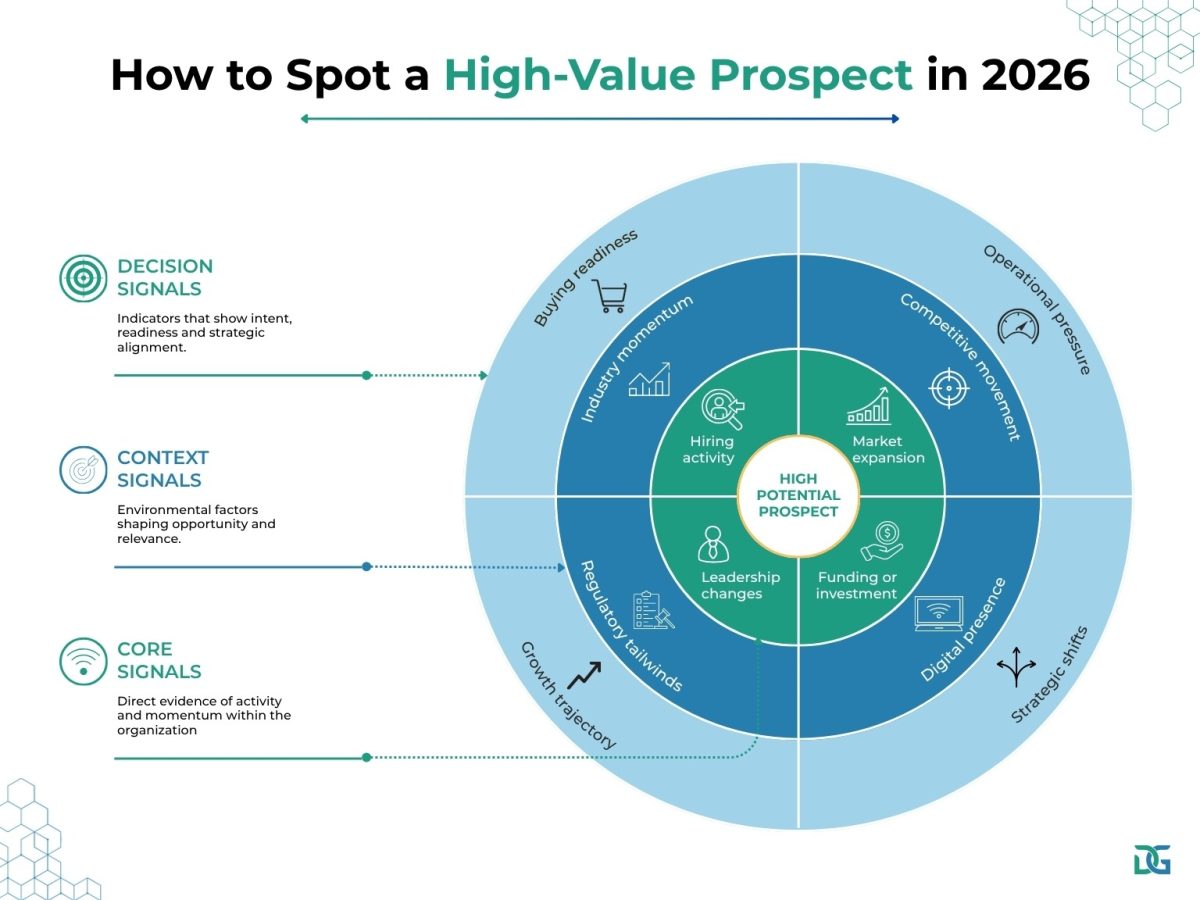
Who is hiring aggressively right now? Who is expanding into new markets? Who has just brought in new leadership? Who has recently registered new charges or taken on additional financing? These are the moments where demand is forming before it becomes visible to the rest of the market.
This is what intent-based prospecting means in practice. It is not about identifying who could theoretically buy your product. It is about identifying who is about to need it, before they have started looking.
Gong demonstrated this with a single, repeatable signal. Their team tracked companies actively hiring for VP of Sales roles and used that appointment as a trigger for outreach. No guesswork, no broad targeting. Just one clear indicator of organisational momentum.
Gong reported a 55 per cent email open rate on cold outreach built around this signal. [Source: Gong case study verify and link before publishing] Not because the messaging was extraordinary, but because the timing and context were undeniable. They were arriving at a moment when the prospect was already thinking about exactly the problem Gong solves.
For UK B2B teams, the application is direct. Rather than prospecting into static segments, build a system that monitors for movement. New director appointments, recent charge registrations, expansion into new trading areas, grant receipts from Innovate UK, and changes in company structure. These are all signals that something is shifting inside a business, and shifting businesses are the ones most likely to be open to a conversation.
For a practical look at how UK companies surface these signals in real time, see DataGardener’s Lending Intelligence guide, which covers how financial movement and charge data are used to identify companies at the precise moment of expansion.
The prospecting technique: Replace static list building with signal-based triggers. Identify two or three observable events that typically precede a buying decision for your product, and build your outreach cadence around those moments rather than around firmographic filters alone.
How Do the Best Sales Prospecting Techniques Use Insight Rather Than Surface Personalisation?
Basic personalisation is invisible now. First name, company mention, a reference to something on their LinkedIn profile. Every outreach tool does this automatically. Prospects see through it immediately because it requires no actual knowledge of their situation.
What stands out is insight.
Having a genuine point of view about what is happening inside that company, what they are trying to achieve, where friction is likely to show up, and what comes next. That is what shifts the tone from a pitch to something a prospect finds genuinely worth reading.
Outreach tested this at scale across 10,000 sequences. They did not change the channel, the cadence, or the tooling. They changed one thing only: the depth of insight in the messaging. The result was a 219 per cent increase in reply rates. [Source: Outreach research — verify and link before publishing]
Same prospects. Same timing. Same outreach volume. Just sharper, more specific thinking about the situation each prospect was actually in.
For UK B2B sales teams, the insight gap is a significant opportunity. Most outreach arriving in a UK decision-maker’s inbox references generic industry challenges or pulls a line from the prospect’s website. The teams seeing the strongest response rates are those that reference something specific, observable, and commercially relevant. A recent company filing reveals financial pressure. A new hire that signals strategic intent. A market shift affecting their particular sector.
This level of specificity cannot be faked with a mail merge field. It requires actual research or a data platform that automatically surfaces the right signals. For UK sales teams wanting to build insight into their outreach at scale, DataGardener’s Data Enrichment module enables real-time CRM enrichment that keeps prospect intelligence current.
The prospecting technique: Before writing any outreach, identify one specific, observable thing happening inside the prospect’s business that is directly relevant to what you are selling. Build the entire message around that single observation rather than around your product’s features or benefits.
Which Sales Prospecting Techniques Let Your Prospect Qualify Themselves?
Most outbound prospecting still follows the same pattern. You reach out, you explain your product, you try to generate interest, and then you spend the rest of the conversation trying to establish whether the person is actually a fit.
That process is slow, costly, and increasingly ineffective.
The stronger B2B prospecting approach is to reverse it entirely. Instead of trying to appeal to as broad an audience as possible, describe a situation so specifically that only the right people recognise themselves in it. When the messaging is precise enough, prospects self-select. The ones who feel the pain you are describing respond. The ones who do not, do not. And that is exactly what you want.
Clay built their outbound growth strategy on this principle. Their messaging does not attempt to include everyone. It speaks directly to a very particular operational frustration around data enrichment and manual prospecting workflows. If you feel that frustration daily, the message lands immediately. If you do not, it passes you by.
The impact was a demo-to-close rate that rose from 23 per cent to 68 per cent. [Source: Clay case study — verify and link before publishing]
Because by the time someone enters a sales conversation through that kind of messaging, they are already aligned. The qualification has already happened. You are not selling to a sceptic. You are having a detailed conversation with someone who arrived already convinced they have the problem you solve.
For UK B2B teams, this technique requires a willingness to be specific enough that some prospects will not recognise themselves in the messaging. That feels counterintuitive. But the conversion improvement at every subsequent stage more than compensates for the narrower initial response pool. For further reading on how UK sales teams are building more targeted prospect lists using company intelligence.
The prospecting technique: Rewrite your outreach to describe the specific situation, frustration, or trigger event of your ideal customer as precisely as possible. Accept that this will reduce the number of responses from poor-fit prospects, and measure success by pipeline quality and close rate rather than reply rate alone.
How Do High-Performing UK B2B Sales Teams Use Timing as a Core Prospecting Technique?
Everyone in UK B2B sales is running multi-channel outreach. Email, LinkedIn, calls, content, retargeting. Multi-channel is not the competitive advantage anymore. It is simply the baseline expectation.
Timing, on the other hand, remains one of the most underexploited levers in outbound sales prospecting.
Reaching out to a company when nothing significant is happening inside it rarely produces results, regardless of how polished the message is or how many touchpoints the sequence includes. The product may be genuinely relevant. The messaging may be well crafted. But if the prospect is not in a moment of change or pressure, there is no urgency to engage.
The same message sent at a moment of genuine organisational shift lands entirely differently.
ZoomInfo, a US-based sales intelligence platform, demonstrated this internally by approaching the same target accounts at different time windows. They did not change the audience, the product, or the team. They simply changed when they reached out, focusing on accounts experiencing a relevant trigger event at that specific moment.
The outcome was eleven million dollars in incremental annual recurring revenue, driven purely by improved timing. No product change. No increase in headcount. No new channel strategy. [Source: ZoomInfo — verify and link before publishing]
For UK B2B sales teams, the practical application of this insight requires access to data that reflects what is actually happening inside target accounts in near real time. Companies House filing updates, director appointment notifications, new charge registrations, changes in trading activity, and sector-level economic indicators all provide timing signals that static CRM data cannot surface.
The teams building this kind of trigger awareness into their prospecting systems are consistently outperforming those relying on periodic list refreshes and fixed cadence sequences. For a detailed look at how UK companies are using real-time company data to improve prospecting timing, see DataGardener’s guide to predictive growth intelligence.
The prospecting technique: Audit your current outreach sequences and identify whether they are triggered by time intervals or by prospect behaviour and company events. Where they are time-based, rebuild them around observable trigger events instead. Start with two or three signals that reliably precede engagement in your existing customer base and use those as your new outreach triggers.
What Sales Prospecting Techniques Make Outreach Feel Like Discovery Rather Than Interruption?
The instinct to disengage from anything that feels like a sales approach is now faster and more automatic than it has ever been.
The gap that remains, however, is discovery.
People are consistently open to finding something useful, learning something they did not know, or encountering a perspective that reframes a problem they are already thinking about. The best prospecting techniques in the current UK B2B market exploit this gap deliberately.
Instead of pushing messages, the approach is to create moments where prospects come across something that makes them stop. A sharp observation about their industry. A specific data point that is directly relevant to their situation. A pattern they recognise from their own experience. Content or outreach that feels like it was created for them specifically, not sent to them as part of a sequence.
Loom built their entire early growth model on this principle. Rather than explaining their product’s value through conventional outreach, they showed it in action. Every interaction with a prospect also functioned as a product demonstration. The outreach and the product were the same thing.
Notion took the concept even further. In its earliest growth phase, Notion reached its first million dollars in annual recurring revenue largely through organic, word-of-mouth discovery, before any formal sales motion was in place. [Source: Notion growth verify and link before publishing]
For UK B2B sales teams, this technique translates into thinking carefully about what useful, specific, and genuinely relevant thing you can offer at the first point of contact. Not a feature overview. Not a case study PDF. Something that creates value in the moment it is received, before any commercial conversation begins.
This might be a specific insight about the prospect’s sector. A brief analysis of something observable in their company data. A relevant benchmark from their industry. The specificity matters enormously. Generic value is invisible. Specific, relevant, timely value creates the kind of first impression that makes a prospect want to respond. For practical examples of how UK companies are using sector-level intelligence to create discovery moments in outreach, see DataGardener’s responsible procurement and market intelligence resources.
The prospecting technique: Before your next outreach sequence, define one genuinely useful thing you can offer at the point of first contact that requires no commitment from the prospect to benefit from. Make that the lead, not your product.Let the product enter the conversation because the prospect is already asking — not because you have pushed it.
Where Should UK B2B Sales Teams Focus Their Prospecting Efforts First?
Not every team can implement all five of these techniques simultaneously. Trying to do so tends to produce fragmented execution across all of them rather than strong results from any single one.
The most effective starting point depends on where your current prospecting is breaking down.
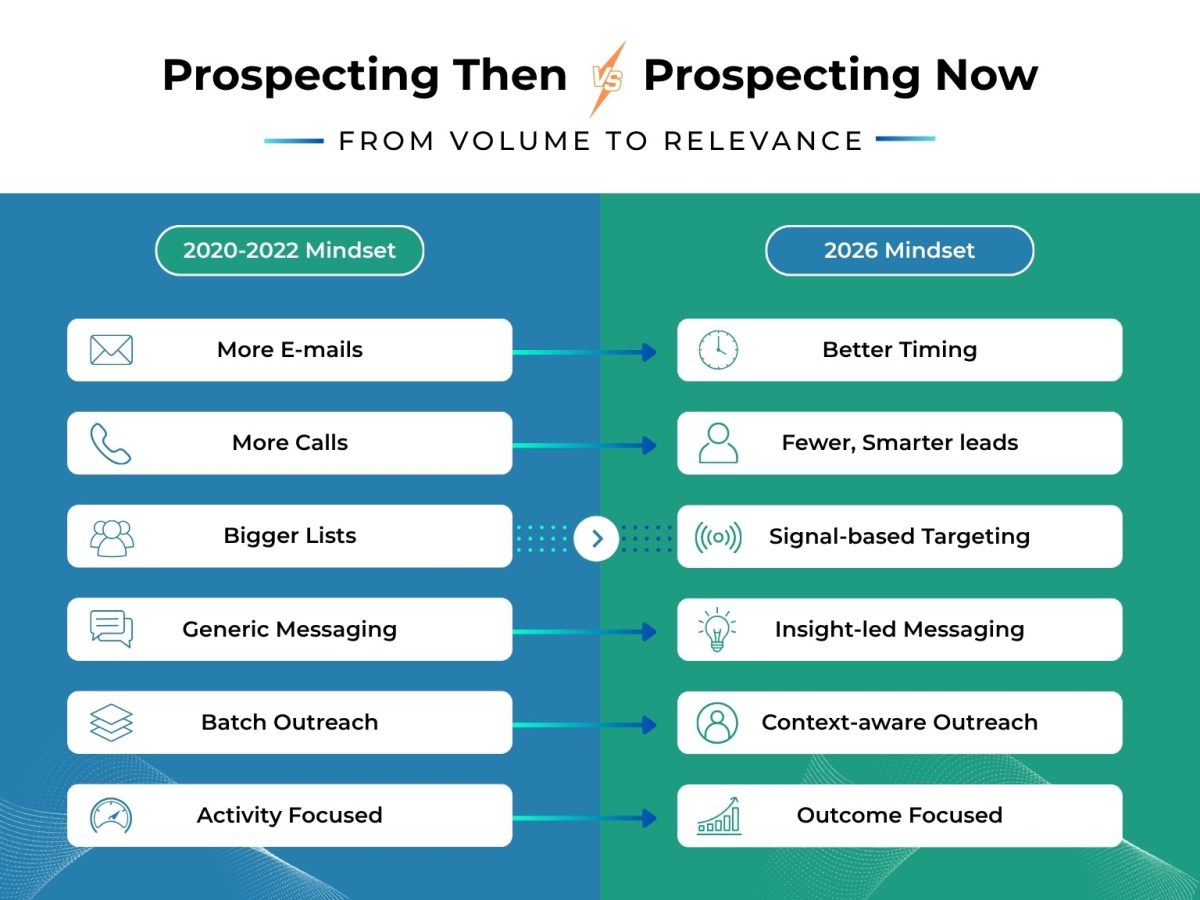
If your open rates are low, the timing and signal-based technique from point one is the highest-leverage intervention. If your reply rates are low despite decent open rates, the insight depth technique from point two will produce the fastest improvement. If your close rates are low despite a high volume of meetings, the self-qualification technique from point three addresses the root cause directly. If your pipeline is inconsistent, building trigger-based outreach sequences from point four will create more predictable pipeline flow. If your prospects are consistently disengaged at first contact, the discovery-first approach from point five resets the relationship dynamic entirely.
The underlying principle connecting all five of these sales prospecting techniques is the same. Relevance, timing, and genuine value at the point of contact consistently outperform volume, persistence, and broad targeting in the UK B2B market.The teams that understand this are not just generating more leads. They are generating better ones, at lower cost, with higher conversion rates at every subsequent stage of the pipeline. For UK sales teams wanting to build a prospecting infrastructure around real-time company intelligence and signal-based outreach, DataGardener’s Business Intelligence platform provides the data layer that makes precision prospecting systematic rather than occasional.
What has changed the most in sales prospecting?
The shift from volume to precision. It is no longer about reaching more people. It is about reaching the right people at the right moment with something that actually matters to them.
Is cold outreach still worth doing?
Yes, but only if it feels relevant. Generic messages get ignored. Outreach works when it connects to something already happening inside the company, not when it arrives without context.
Why do most prospecting efforts fail?
Because too much time is spent on the wrong companies. Not every business is ready to buy or grow. Without proper filtering, teams end up pursuing opportunities that were never going to convert.
What role does data play in modern prospecting?
Data helps, but only when it is interpreted properly. It is not about having more information. It is about understanding what that information reveals about where a company is heading. Platforms such as DataGardener surface real-time UK company intelligence — financial filings, director appointments, charge registrations — so that interpretation is built into the prospecting workflow rather than left to manual research.
Other Articles:

Leave a Reply
You must be logged in to post a comment.