

What the 2025 Data Reveals About Scaling, Risk and Resilience
As UK businesses look ahead to 2026, one truth is becoming increasingly difficult to ignore. Decisions based on instinct, headline growth figures or backwards-looking indicators are no longer enough.
The UK economy is not slowing. It is becoming more selective.
Insights from the DataGardener Annual UK Market Report 2025, built on millions of verified UK company records, show that while entrepreneurial activity remains strong, the conditions for progression and scale have tightened significantly. In this environment, a data-driven business strategy is no longer optional. It is the defining factor between businesses that progress and those that plateau.
This article examines what the 2025 data reveals about the UK business landscape and why organisations that adopt a data-driven approach will be best positioned to navigate 2026.
What Is a Data-Driven Business Strategy?
A data-driven business strategy uses verified, company-level evidence to guide decisions around growth, capital allocation, risk management and governance.
Rather than relying on averages or sentiment, it focuses on:
- Growth quality, not just growth volume
- Early warning signals, not lagging outcomes
- Structural context, not isolated metrics
In a selective economy, understanding why outcomes differ matters more than knowing what happened.
Why 2025 Changed the Rules for UK Businesses
In 2025 alone, 802,296 new companies were incorporated across the UK. At the same time, historical data show more than 11.4 million business dissolutions, highlighting significant churn beneath the surface.
As of 2025, the UK business population stands at 5,459,196 active companies.
On the surface, these numbers suggest a healthy, dynamic economy. However, a data-driven business strategy reveals a more complex reality. Participation remains high, but progression has become increasingly rare.
This is not a downturn. It is a period of selection.
Participation vs Progression: The Scaling Bottleneck
One of the clearest insights from the data concerns company size.
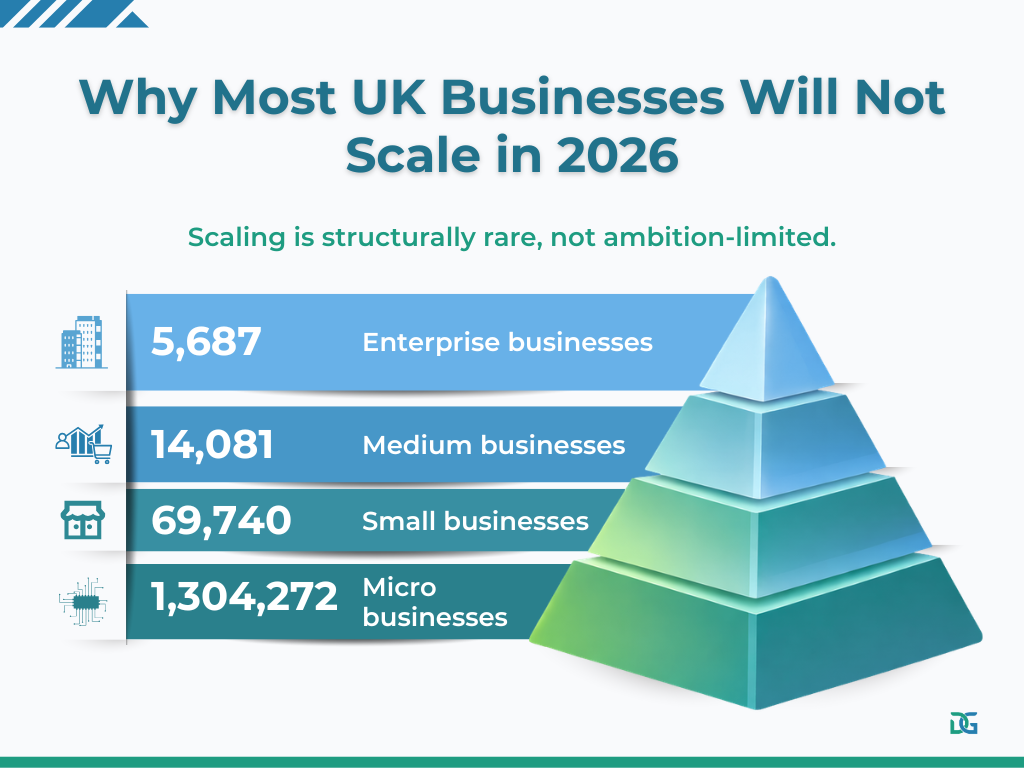
Between 2019 and 2025:
- Over 1.3 million companies operated at a micro scale
- Around 69,740 companies fell into small enterprise bands
- Only 14,081 companies reached medium size
- Just 5,687 companies operated at an enterprise scale
This progression funnel is exceptionally narrow.
A data-driven business strategy makes it clear that most UK businesses do not fail. They stagnate. They remain operational but struggle to move beyond early stages due to capital constraints, governance complexity and accumulated risk.
Growth Exists, but It Is No Longer Evenly Distributed
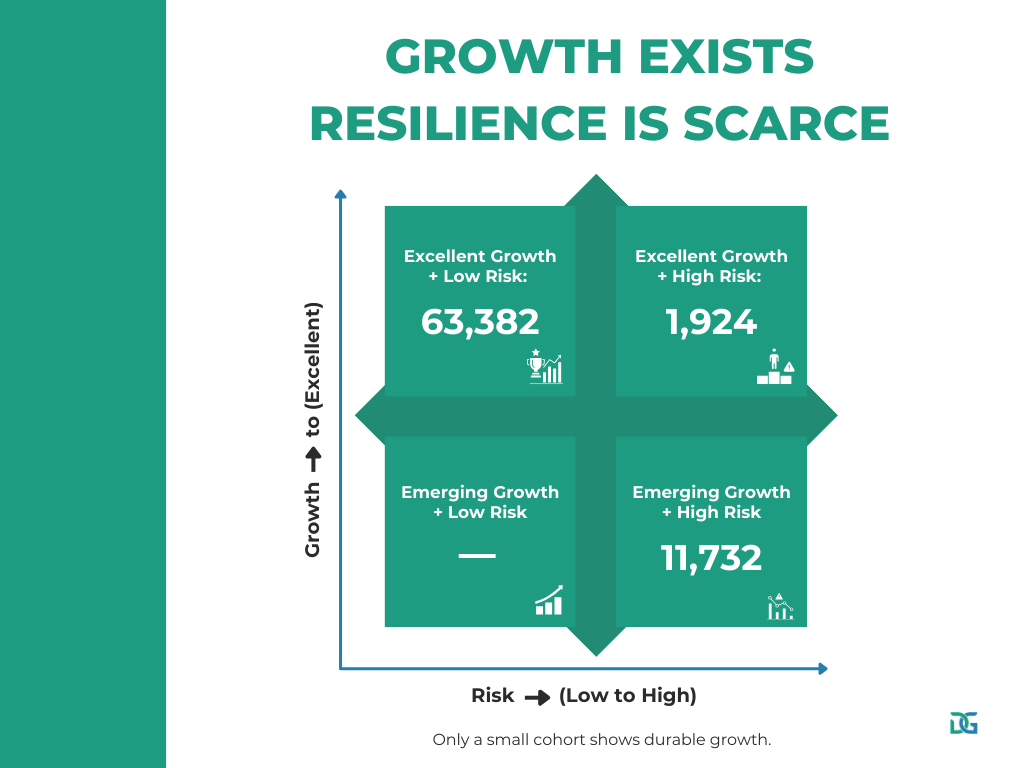
Headline growth metrics obscure the quality of that growth.
Across the combined 2019–2025 dataset, DataGardener identified:
- 63,382 companies with excellent growth quality and low risk
- 11,732 companies showing emerging growth with high risk
- 1,924 companies combining excellent growth with high risk
These figures demonstrate that resilient growth is scarce relative to the size of the UK business population.
A data-driven business strategy helps distinguish between:
- Growth built on strong fundamentals
- Growth driven by leverage or unresolved pressure
In 2026, this distinction will be critical.
Capital Is Still Flowing, but Risk Is Accumulating
Access to capital remains widespread, but resolution is lagging.
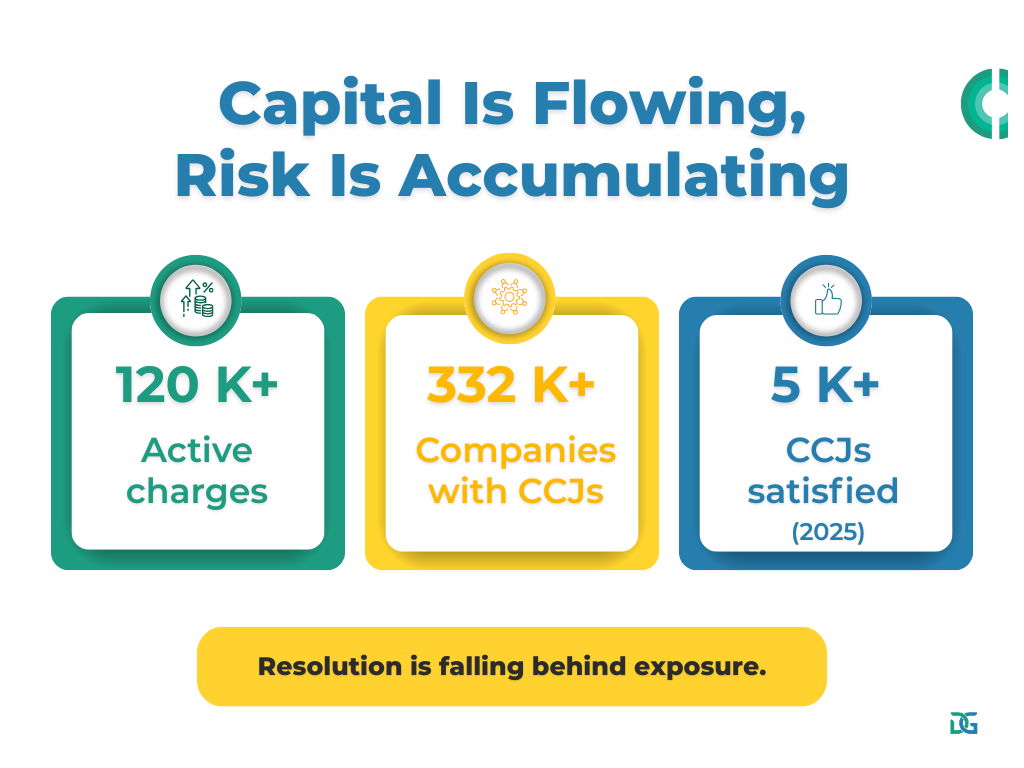
In 2025:
- 120,529 companies held active registered charges
- 332,549 companies had at least one CCJ on record
- Only 5,649 CCJs were satisfied during the year
These figures reveal a structural imbalance. Businesses continue to borrow and operate while unresolved financial stress accumulates quietly.
Without a data driven business strategy, this pressure often goes unnoticed until it constrains growth or forces exit.
Sector Structure Reinforces the Need for Data
When analysed using the IS-8 framework, the UK economy remains heavily concentrated within:
- Professional and Business Services
- Creative Industries
- Digital and Technologies
- Financial Services
These service-led sectors dominate company formation and overall scale. They also tend to have lower barriers to entry and higher competition, making sustainable differentiation harder as businesses grow.
A data driven business strategy allows organisations to understand:
- Where sector concentration increases risk
- How competition impacts margin and resilience
- Which segments show stronger progression signals
Geography: Opportunity and Pressure Travel Together
Regional analysis further reinforces the need for evidence-led decision-making.
London, the South East and the North West continue to lead in company formation. These regions also show the highest borrowing activity and legal stress.
Growth hubs bring opportunity, but they also concentrate pressure.
A data driven business strategy enables businesses, lenders and policymakers to evaluate regional opportunity alongside risk, rather than treating location as a proxy for performance.
Leadership and Governance as Growth Signals
As businesses scale, governance quality becomes decisive.
In 2025, the UK business population included:
- 572,486 male directors
- 239,179 female directors
While director participation continues to grow, governance experience is unevenly distributed. Businesses with access to experienced leadership, advisory networks and non-executive oversight are far more likely to appear in low-risk, high-growth cohorts.
A data driven business strategy treats leadership signals as predictors, not footnotes.
What the Data Shows About Women-Founded Businesses
Women-founded businesses highlight why strategy must be evidence-led.
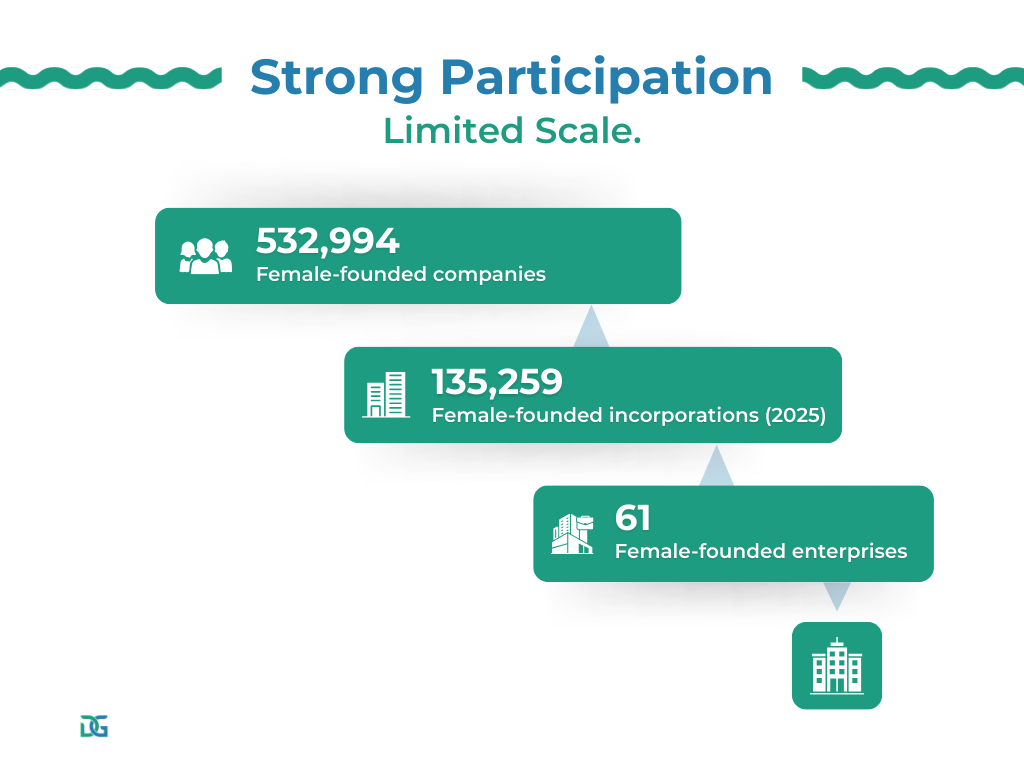
Between 2019 and 2025:
- 532,994 female-founded companies were identified
- 135,259 female-founded businesses were formed in 2025
- Only 61 operate at enterprise scale
Participation is strong. Progression remains constrained.
A data driven business strategy helps shift the focus from encouraging entry to supporting scale through targeted capital access, governance support and early intervention.
What This Means for UK Businesses in 2026
The UK economy is entering a phase of selective acceleration.
In 2026:
- Growth will continue, but it will favour resilience
- Capital will remain available, but risk tolerance will tighten
- Governance quality will influence outcomes earlier
- Progression quality will matter more than participation volume
Businesses that rely on intuition or surface-level metrics will struggle to adapt. Those that adopt a data driven business strategy will be better equipped to:
- Identify early warning signals
- Allocate capital more effectively
- Strengthen governance before pressure escalates
- Convert momentum into durable growth
Final Thoughts
The UK does not suffer from a lack of entrepreneurship. It suffers from a lack of progression at scale.
The data shows that most UK businesses will not scale in 2026, not because ambition is missing, but because the structural conditions required for sustainable growth are unevenly distributed.
A data driven business strategy is the most reliable way to navigate this reality.
By grounding decisions in verified, company-level insight, organisations can move from reacting to outcomes to shaping them.
All insights in this article are drawn from DataGardener’s UK Market Intelligence datasets and the DataGardener Annual UK Market Report 2025.
For deeper analysis and the full evidence base shaping 2026, download the complete report here:
👉 [Report download link]