
B2B business data has moved from being a supporting resource to a central driver of commercial performance. In 2026, organisations no longer rely on static contact lists or isolated datasets. They depend on structured, continuously updated intelligence that reflects how businesses operate, interact, and grow.
This guide covers what B2B business data is, why it matters, and how organisations across sales, marketing, and strategy are using it to make better decisions. If you are also exploring how data enrichment works in practice, our guide on how DataGardener’s Data Enrichment module supports UK businesses covers the operational detail.
What Is B2B Business Data and Why Does It Matter?
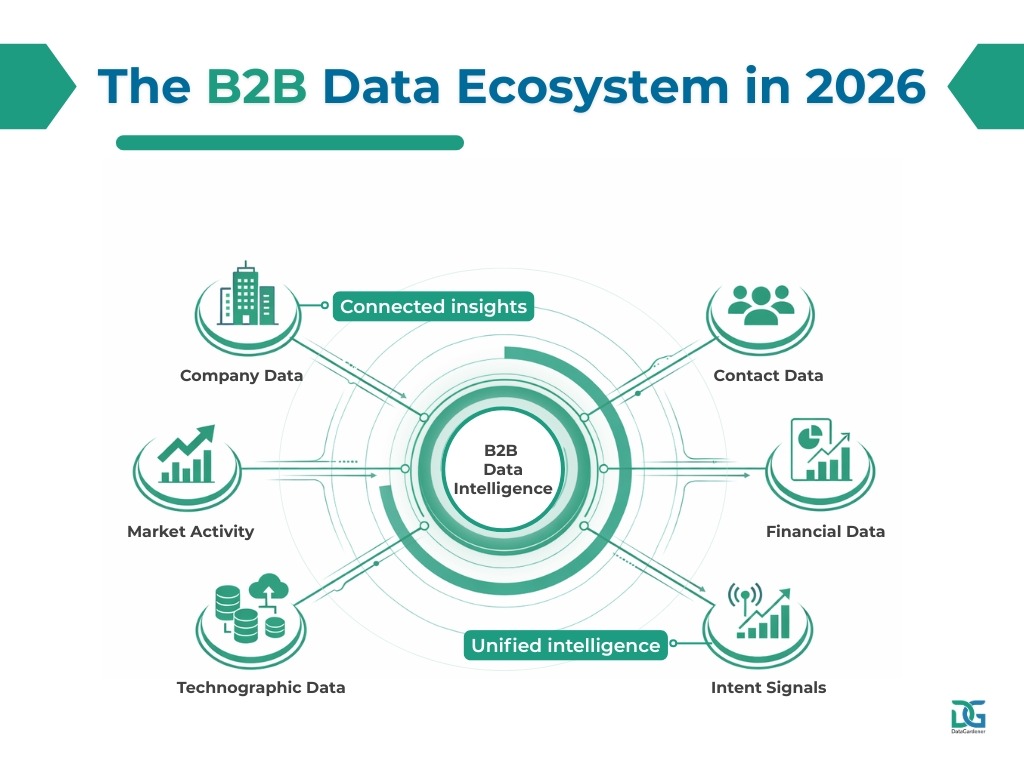
At its core, B2B business data refers to information collected and analysed about companies, their decision makers, operational structures, and market behaviour.
This includes company profiles, financial indicators, contact details, transactional activity, and behavioural signals. However, the real value lies not in individual data points but in how these elements connect to form meaningful intelligence.
Modern B2B business data is no longer purely descriptive. It is increasingly predictive, helping organisations anticipate market shifts, identify opportunities earlier, and make strategic decisions with greater confidence.
Markets are more competitive. Decision cycles are faster. Organisations that access reliable, well-structured data consistently outperform those still working from incomplete or outdated information.
What Types of B2B Business Data Actually Influence Decisions?
Not all B2B business data carries equal weight. Understanding the distinctions is essential for using it effectively.
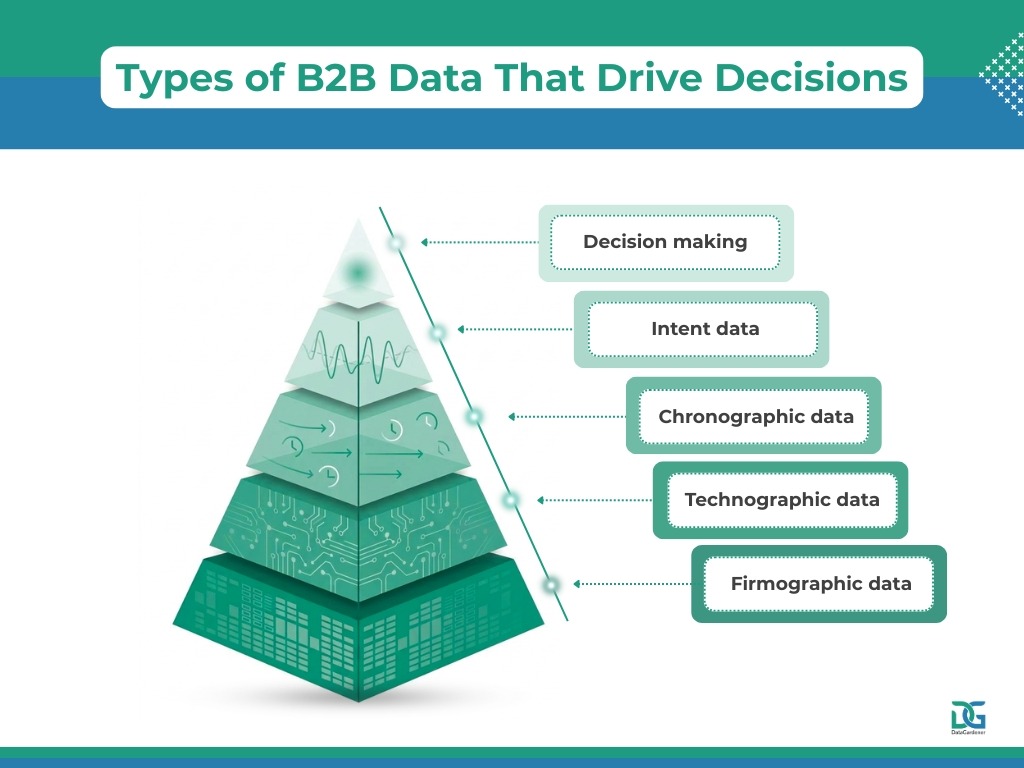
Firmographic data covers company structure including size, industry, revenue, and organisational hierarchy. It forms the foundation of most targeting strategies.
Technographic data reveals the technologies a company currently uses, indicating operational maturity and compatibility with specific products or services.
Chronographic data focuses on time-based changes such as leadership transitions, funding rounds, or expansion activity. These signals often indicate new commercial opportunities before they become visible to the wider market.
Intent data captures behavioural signals including online activity and content engagement, suggesting potential interest in a product or service. According to Gartner, organisations using intent data alongside firmographic context achieve significantly higher conversion rates than those relying on intent signals alone.
Together, these data types build a layered picture of a business that enables precision targeting rather than broad outreach.
Where Does B2B Business Data Come From?
The quality of B2B business data is directly linked to its source. Different sources offer varying levels of depth, accuracy, and reliability.
Public sources such as Companies House filings, HMRC records, and government registers provide structured, verifiable information about financial performance, ownership structures, and regulatory compliance. These are the most credible foundation for any data strategy.
Digital platforms, including professional networks and company websites, offer insight into organisational changes, leadership activity, and market positioning.
Internal systems such as CRM platforms capture historical interactions and customer behaviour, forming a proprietary dataset that external providers cannot replicate.
Third-party data providers offer pre-built databases and enriched datasets. The most effective strategies combine multiple sources, ensuring a more complete and accurate view of the market. For a detailed look at how DataGardener integrates over 35 verified UK sources into a single platform, see DataGardener’s Business Intelligence module.
How Does B2B Business Data Support the Sales Process?
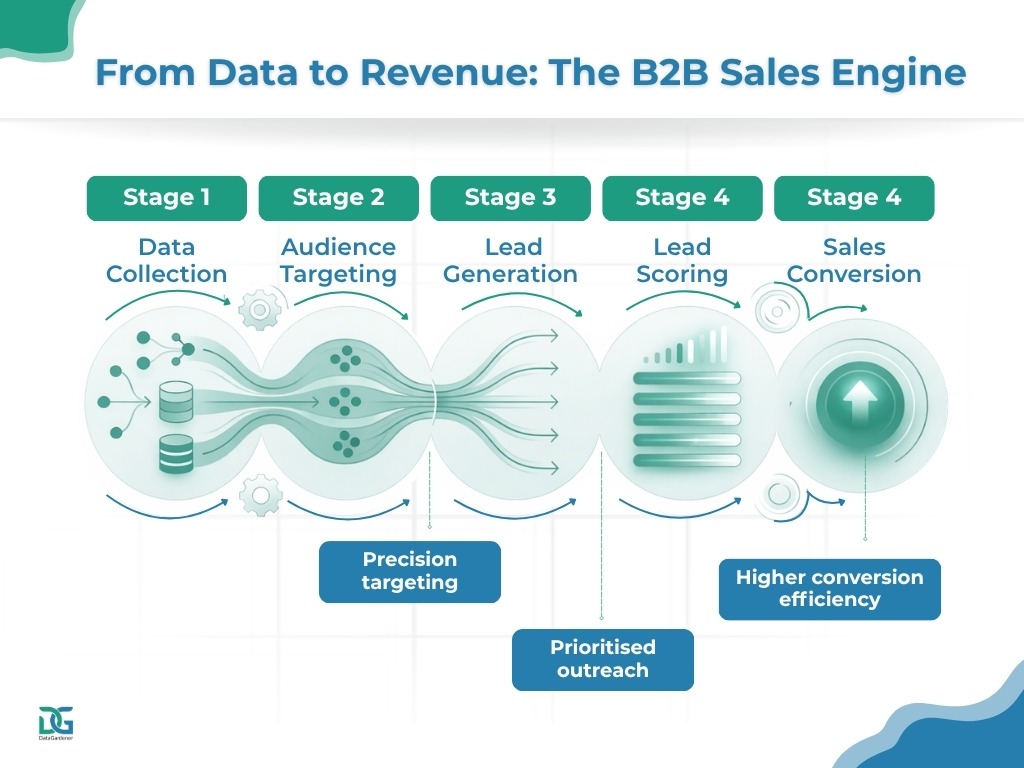
B2B business data plays a central role across the entire sales journey, from initial awareness through to conversion.
At the early stage, data supports demand generation by identifying relevant audiences. As prospects engage, lead generation processes capture their information for initial outreach. Lead scoring then helps sales teams prioritise opportunities based on their likelihood to convert.
More advanced strategies such as account-based marketing, rely heavily on B2B business data to target high-value organisations with tailored, relevant messaging. Rather than targeting broad market segments, teams can focus on specific accounts and decision-makers with considerably greater accuracy.
Data analytics provides continuous feedback throughout this process. Consequently, teams can refine their approach, improve conversion rates, and reduce the cost of acquiring each new customer over time. For practical guidance on how UK sales teams are applying these principles, see our article on sales prospecting techniques that actually work for UK B2B teams.
What Makes an Ideal Customer Profile and How Does Data Shape It?
An Ideal Customer Profile forms the foundation of any effective B2B business data strategy. It defines the type of organisation most likely to benefit from a product or service and, therefore, most likely to convert.
Building a strong ICP involves analysing firmographic characteristics such as industry, company size, revenue band, and geography. It also requires identifying the individuals within those organisations who hold decision-making authority or commercial influence.
Additional factors including company tenure, departmental structure, and previous engagement patterns further refine targeting precision. A well-defined ICP allows organisations to focus their efforts more effectively. As a result, resources are concentrated where conversion probability is highest rather than distributed broadly across the market.
How Is B2B Business Data Used Across Business Functions?
The impact of B2B business data extends well beyond sales and marketing. It has become a shared organisational asset that supports decisions at every level.
Sales teams use it to improve lead generation, targeting, and engagement quality. Marketing teams apply it to segment audiences, personalise campaigns, and measure performance against meaningful outcomes rather than vanity metrics.
Operational teams benefit from data-driven insights that improve resource allocation and customer service efficiency. At a strategic level, organisations use B2B business data to assess new markets, evaluate competitors, and guide long-term planning with a clearer evidence base.
This cross-functional value is why data quality has become a board-level concern in many organisations, not simply an operational one.
What Challenges Do Organisations Face With B2B Business Data?
Despite its advantages, working with B2B business data presents several persistent challenges that organisations must address directly.
Data quality remains the most significant concern. Inaccurate or outdated information leads to poor targeting decisions, wasted outreach effort, and reduced conversion performance. Contact data in particular degrades rapidly. Research from Experian suggests that poor data quality costs UK businesses billions annually, with data decay identified as a primary driver of missed commercial opportunities.
Integrating data from multiple sources adds complexity, particularly when internal systems are not aligned or use inconsistent classification standards. Additionally, organisations must maintain compliance with UK GDPR and data protection regulations. The ICO’s UK GDPR guidance provides the authoritative framework for organisations managing business data responsibly.
Furthermore, the ability to interpret and act on data requires the right analytical skills and technology infrastructure. Without these, even high-quality data fails to deliver meaningful commercial value.
How Can Organisations Maintain High Quality B2B Business Data?
Maintaining accurate B2B business data requires a combination of process discipline, technology investment, and clear governance standards.
Regular verification and updating are essential, particularly for contact information and financial details that change frequently. Data cleansing practices including removing duplicates, correcting inconsistencies, and standardising formats help maintain reliability across datasets.
Enrichment processes enhance existing records by adding missing information, providing a more complete view of each account. Platforms that integrate directly with Companies House, HMRC, and other verified UK sources ensure that enrichment draws from credible, primary data. For procurement teams specifically, understanding how supplier data is verified and maintained is covered in detail in DataGardener’s Responsible Procurement guide.
Strong data governance frameworks ensure that data is managed consistently and used responsibly across all teams and functions.
Conclusion: Why B2B Business Data Is Non-Negotiable in 2026
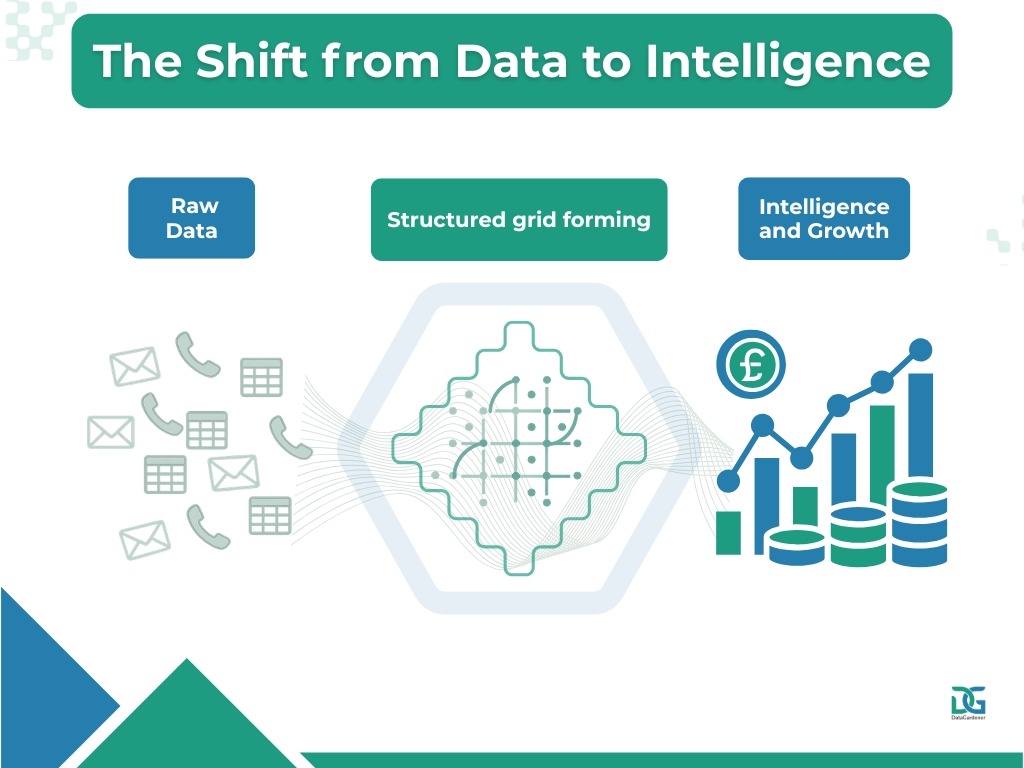
n 2026, B2B business data is not optional. It is a fundamental component of how organisations compete, grow, and serve their customers effectively.
Organisations that invest in high-quality, well-structured B2B business data are better positioned to understand their markets, engage the right audiences, and make decisions with confidence. Those that continue to rely on incomplete or unverified information face compounding disadvantages as competitors act on intelligence they do not have.
The ability to transform data into actionable insight remains the defining commercial advantage for businesses operating in the UK market today.